When I was a little girl, there was a lack of female heroes in everyday pop culture – women I could look up to, who kicked ass, who were brave beyond measure. Back in the 1980s and 1990s, Disney princesses were more often damsels in distress than awesome heroines, and female “leads” were glorified sidekicks, not Saturday morning cartoon headliners.
I found my inspiration instead in the stories immortalized by my family – about a fast-talking feminist, a fearless revolutionary, a rifle-wielding sharpshooter.
I found inspiration in my grandmother.
Shayera Ahmed wasn’t born with superpowers or with extraordinary abilities, but she was brave and smart – one of the first commanders of the Women’s National Guard of Pakistan in 1949, who would go on to protect my family and shepherd them to safety when Bangladesh (what was then East-Pakistan) fought for their independence against Pakistan (then West-Pakistan) in 1971. My Bangladeshi nationalist family would often tell tales of the 1971 Liberation War, and Naan (what her grandchildren all called her), was always my favorite character.
My grandmother passed away a few years ago, but her stories of fortitude and strength in the face of struggle have stayed behind. For me, it was precisely because Naan wasn’t a superhero that I found her stories to be so much more inspirational and incredible. She never sat back and let someone set the rules for her, not even after my grandfather died in 1958, leaving her a widow at just 36 years old with eight children. The universe never constrained my grandmother, it conformed to her. She showed us all that if you had conviction and were brave – often times when no one was looking – you too could write your own story.
Shayera Ahmed taught me that heroes come in all shapes and sizes. They are captured in daily glimpses of human greatness– from the homeless man on your street corner struggling to make a comeback, or the single mother of four trying to make ends meet. Heroes are ordinary people like my grandmother who are brave beyond measure, who make sacrifices for things bigger than themselves, and whose examples of daily strength and courage push us to be better.
My friend Hosan Lee (Founder of TableTribes) and I decided to start The Hero Project as a platform to tell these stories of daily greatness and strength. As two friends passionate about human goodness, connection, and empathy, we felt there needed to be more efforts to lift up the heroes hidden among us.
The Hero Project launches on August 1st and aims to be a collection of portraits of unsung heroes shared by the people they have inspired. While both Hosan and I are passionate storytellers, THP is more than an exercise in storytelling – it is a call to action for us all to be the best version of ourselves, to find inspiration in and honor the ordinary people among us, whether it’s your mentor, neighbor, friend, or – in my case – your warrior of a grandmother.
___________________________________
Kalsoom Lakhani is the CEO/Founder of Invest2Innovate, which supports startups in Pakistan and aims to grow the entrepreneurial ecosystem in new and untapped markets. She is also the co-founder of The Hero Project, an online platform that celebrates our everyday hidden heroes, and is deeply passionate about startups, coffee ice cubes and her dog Rosie.
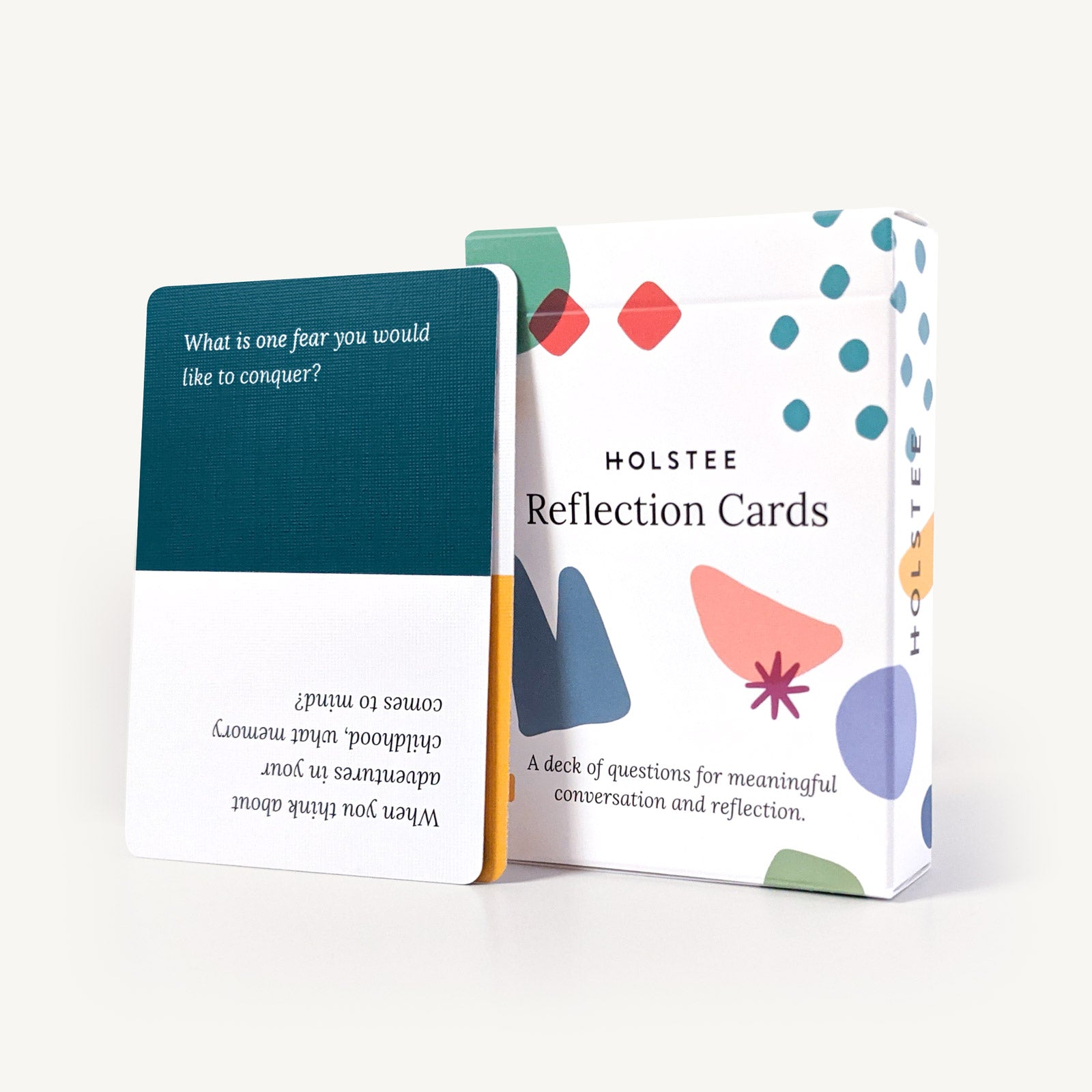
Your nervous system is the invisible backdrop to every moment of your life: how you focus at work, how you argue with a partner, how you recover from a panic attack or anxiety attack, how you fall asleep, how you come back to yourself after feeling anxious. When you learn its language, everyday life starts to feel a little less random, and a lot more workable.
This guide gathers zero-cost resources from nervous system expert Jonny Miller, who partnered with us on Calm Cards, to help you build “nervous system literacy” — the skills to notice what is happening inside you and gently respond, not just react. Stay as you are, bring your curiosity, and move at your own pace.
TL;DR Summary
Nervous system literacy is your ability to understand what your body is trying to tell you — and respond with care instead of harshness. Start with the Nervous System Quotient (NSQ) self-assessment, then explore the resources that speak most to where you are right now.
Nervous system literacy helps you recognize patterns of stress, shutdown, and resilience in everyday life.
The free NSQ assessment gives you a personalized snapshot and practical next steps.
Curated videos, essays, podcasts, and books from Jonny Miller offer structured ways to deepen this work over time.
You can pair these resources with Calm Cards to turn insights into embodied practice.
Table of Contents
Start with the Nervous System Quotient (NSQ)
Four videos to build a foundation
Four essays to deepen your understanding
Nervous-system-friendly listening on the go
Six books to go deeper when you’re ready
How to use these resources with Calm Cards
Frequently Asked Questions
Start with the Nervous System Quotient (NSQ)
If you only do one thing, begin here. The Nervous System Quotient (NSQ) is a free self-assessment that gives you a snapshot of how your nervous system is functioning right now, along with personalized suggestions for where to focus next.
It helps you see patterns: where you feel resourced, and where you tend to shut down, speed up, or disconnect.
At the end, you receive tailored protocols for each area, so you’re not just learning concepts — you’re getting next steps you can try in real life.
You can take the NSQ assessment for free here: http://assessment.nsmastery.com/
Four videos to build a foundation
Think of these four videos as your introductory course in “how your inner wiring really works.” You can watch them in order, or choose the one that feels most relevant today.
Video 1: Nervous System Mastery 101 (Start Here)
A friendly overview of your nervous system, why it matters for stress, mood, and relationships, and what “nervous system mastery” actually means in day-to-day life.
Video 2: The Truth About How Your Nervous System Operates
A deeper look at the patterns underneath your reactions, including how your body decides when you’re safe and when to prepare for threat.
Video 3: Interoception 101 for Beginners (Start Here)
An introduction to interoception: your ability to sense internal signals like heartbeat, breath, tension, or butterflies in your stomach — and why this “inner listening” is essential for emotional regulation.
Video 4: How To Reset a Dysregulated Nervous System (14 Techniques)
A practical tour of simple, body-based tools you can experiment with when you feel overwhelmed, shut down after a panic attack, in the middle of an anxiety attack, or stuck feeling anxious in loops.
Four essays to deepen your understanding
If you prefer to learn through reading, Jonny’s essays offer a thoughtful blend of science, story, and practice. They’re a beautiful complement to the Calm Cards.
The Art and Science of Interoception
Why listening to your body is a learnable skill, and how subtle sensations can guide wiser choices — before your mind has words for what you feel.
The Operating Manual for Your Nervous System
A big-picture map of how your nervous system works, explained in plain language, so you can stop pathologizing your responses and start understanding them.
The Best Decision-Making Is Emotional
A reframe of “rational vs emotional” that shows how emotions, when felt and integrated in the body, can actually support clearer, more aligned decisions.
How to Pay Off Your Emotional Debt
An exploration of the unprocessed experiences we carry in our bodies, and gentle ways to begin metabolizing stored emotional “backlog” over time.
Nervous-system-friendly listening on the go
For those days when your eyes are tired or you’re walking, commuting, or washing dishes, audio can be the easiest way to keep learning. Jonny has curated a Nervous System Mastery–specific playlist of interviews on Spotify, bringing together conversations about resilience, trauma, breathing, interoception, and more.
You can subscribe to the playlist on Spotify for easy access here.
Consider choosing one episode to walk with this week and notice: How does your body feel before you press play? How does it feel after?
Six books to go deeper when you’re ready
When you’re ready to spend more time with this work, books can become long-term companions on your nervous system journey. Here are six that Jonny recommends:
Anchored by Deb Dana
A clear, accessible introduction to Polyvagal Theory and how to apply it in daily life, with field-tested exercises to help you feel more grounded and connected.
The Breathing Cure by Patrick McKeown
A detailed collection of breathing protocols backed by 20+ years of field research that can reshape how you relate to breath, stress, sleep, and focus.
Widen the Window by Elizabeth Stanley
A research-based guide to trauma, resilience, and how to expand your capacity to meet stress without burning out.
Nurturing Resilience by Kathy Kain
A deeper dive into somatic therapy and developmental trauma, especially valuable if you’re a practitioner or feel called to a more clinical understanding.
The Practice of Embodying Emotions by Raja Selvam, PhD
A rich combination of research and practices designed to help you build capacity to feel and stay present with intense emotions.
The Myth of Normal by Gabor Maté
A sweeping exploration of how modern culture shapes our health, with a compassionate invitation to reconsider what “normal” really is.
Take Your Nervous System Practice Further
These free resources build your understanding; Calm Cards turn that literacy into a daily habit. Curated by nervous system experts (including Jonny Miller), each card offers a simple, body-based reflection or practice to regulate in moments—perfect for when you notice dysregulation rising.
For Calm Cards owners:
Use NSQ results to pick cards matching your patterns (e.g., "shutdown" → grounding cards).
After a video like "Reset a Dysregulated Nervous System," pull 1–2 cards to embody the techniques right away.
Keep cards bedside or in your bag for panic attack or anxiety attack resets—faster than searching YouTube.
Haven’t tried Calm Cards yet?
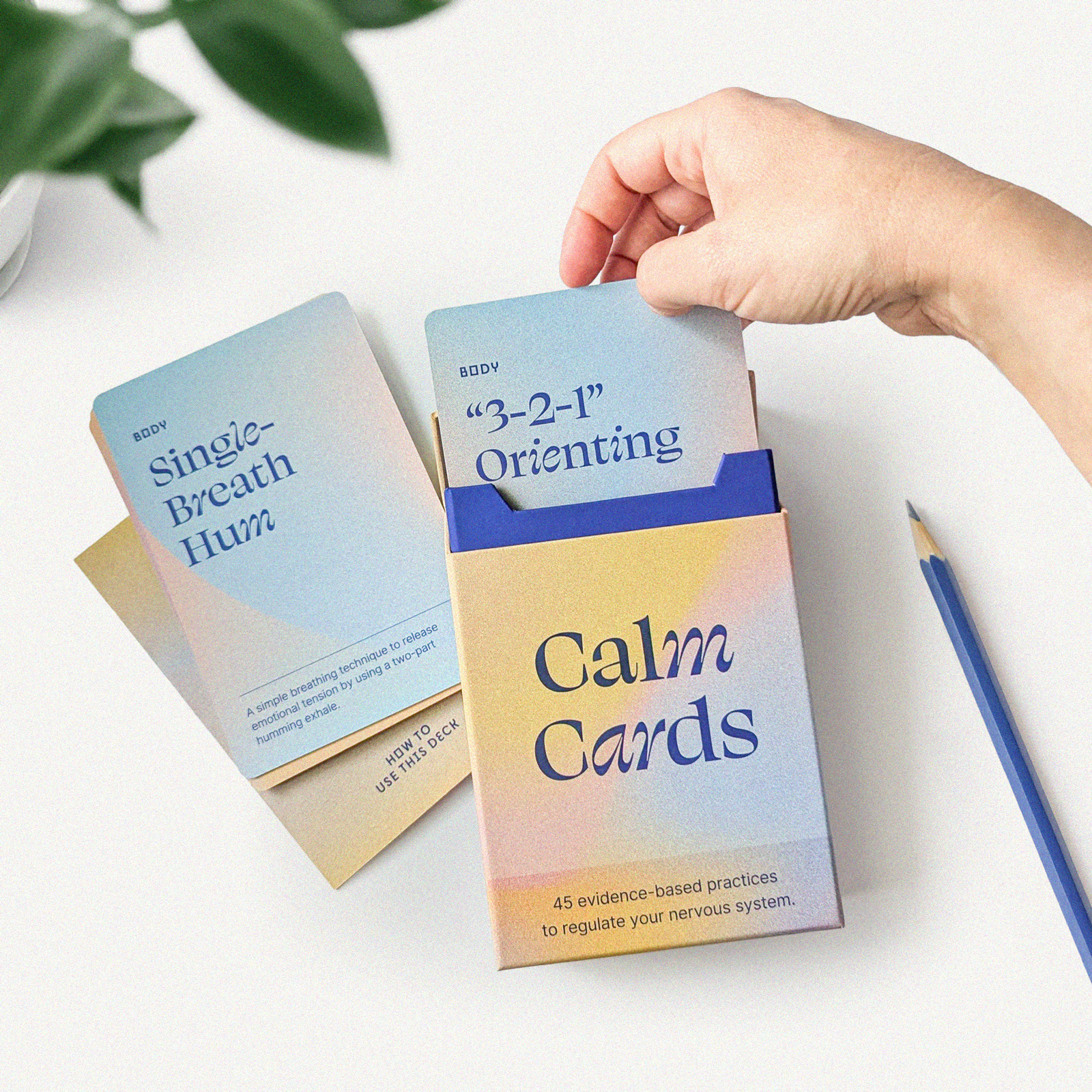
Start free with the resources above, then add Calm Cards to make regulation automatic. They're your portable nervous system toolkit: 45 science-backed practices for when you're feeling anxious, overwhelmed, or just want to stay present. Get your own deck of Calm Cards here.
Frequently Asked Questions
What is nervous system literacy?
Nervous system literacy is the ability to notice and understand your body’s stress responses, signals of safety, and patterns of shutdown or overwhelm. It means recognizing what your nervous system is doing in real time, then responding with simple, supportive practices instead of criticizing yourself or powering through.
Where should I start if I’m new to this?
If you’re brand new, begin with the free Nervous System Quotient (NSQ) self-assessment, then watch the “Nervous System Mastery 101” video. Together, they give you a friendly overview, a personal baseline, and a few gentle practices to experiment with right away.
Can nervous system tools help with panic attacks?
Yes—practices like those in the "Reset a Dysregulated Nervous System" video target the body's fight-or-flight response during a panic attack. Start with breath awareness and grounding techniques to signal safety to your nervous system, often shifting the intensity within minutes.
What to do during an anxiety attack?
During an anxiety attack, pause and use interoception from Video #3: notice your breath, tension, or rapid heartbeat without judgment. The NSQ assessment identifies your patterns, while Jonny’s essays offer ways to regulate your nervous system long-term to reduce frequency.
Why do I keep feeling anxious?
Feeling anxious often signals your nervous system is in protective mode from unprocessed stress or emotional debt (see Essay #4). The free resources here build literacy to notice early cues, apply resets, and widen your capacity over time.
How do these resources connect with Calm Cards?
Calm Cards offer simple reflections and practices you can return to daily. Jonny Miller’s videos, essays, and books add more context and depth. Using them together helps you move from understanding concepts to actually feeling more regulated, present, and resourced in your body.
How much time do I need to see a difference?
You don’t need hours a day. Even 10–15 minutes a few times a week — taking the assessment, watching a short video, or trying one breathing or interoception practice — can create noticeable shifts over time. The key is gentle consistency rather than intensity or perfection.
What if I find this work emotionally activating?
It’s completely normal for nervous system work to bring up strong emotions. Go slowly, pause whenever you need, and choose the gentlest resources first, like short videos or Calm Card reflections. If you have a history of trauma or feel overwhelmed, consider working with a trained somatic or trauma-informed practitioner alongside these tools.
As a new year begins, many of us turn to resolutions with good intentions. We want to be healthier, calmer, more present. But the language we use to define our goals may quietly shape how successful—and how supported—we feel along the way.
Psychologists distinguish between two types of goals: avoidance goals and approach goals.
Avoidance goals focus on the habits we want to stop or prevent: don’t eat junk food, don’t procrastinate, don’t stay up too late. While common, these goals tend to keep our attention on what’s wrong. Over time, that can make them feel effortful, discouraging, or even self-critical.
Approach goals, on the other hand, describe a positive outcome we want to move toward. Instead of avoiding a negative behavior, they invite a nourishing experience.
Consider the difference:
“I want to reduce my screen time” becomes “I want to spend quality time with a friend each week.”
“I need to stop eating junk food” becomes “I want to nourish my body with seasonal foods.”
Health psychologist and TED speaker Kelly McGonigal encourages people to word goals as something to strive toward rather than something to resist. When goals are framed positively, they tend to feel more energizing and more aligned with what actually matters to us.
There’s also a deeper emotional shift embedded in this reframe. Many resolutions carry an unspoken belief: I need fixing. Approach goals gently replace that narrative with another: I want to invite more of what supports me.
That change alone can soften how we relate to growth.
A Simple Reflection to Try
If you’re setting intentions for the year ahead, try this short exercise:
Write down one goal exactly as you’ve been thinking about it.
Ask yourself: Is this framed around avoiding something, or inviting something?
Rewrite it using the phrase: “This year, I want to invite more…”
There’s no need to perfect the wording. Even a small shift can change how an intention feels in your body: from pressure to possibility.
When intentions are rooted in invitation rather than self-correction, they often create more room for curiosity, self-trust, and sustainable momentum. Growth doesn’t have to come from fixing what’s wrong; it can begin by welcoming what helps us flourish.
At The Flourishing Life by Holstee, we know that small shifts in awareness and intention can have a big impact on your daily well-being. We offer simple practices and insights to help you live with more ease, connection, and meaning—plus a community of kindred spirits to support you on your journey.
As a Greater Good Network reader, enjoy $50 off with code GNN50—and step into The Flourishing Life course and community this year.
___________________________________
Amy Giddon is the Community Steward for The Flourishing Life by Holstee and is passionate about lifelong learning. Her career spans management consulting, brand strategy, and leadership development roles. More recently, she founded and operated a mobile app with the intention of rekindling connection through a daily empathy ritual. Across all her work, Amy seeks to foster a sense of togetherness and shared humanity.
Turn overwhelming anxiety into calm presence with these evidence-based mindfulness techniques that work in real-time.
Anxiety doesn't wait for the perfect moment. It shows up before big meetings, during family dinners, in the quiet moments when your mind starts racing. If you've felt your heart pound, your thoughts spiral, your body tense up with worry, you know what it's like.
And you have more power than you might realize.
The connection between mindfulness and anxiety is not only real, it's backed by neuroscience. Research from Harvard and Massachusetts General Hospital shows that just eight weeks of mindfulness practice can reduce amygdala reactivity (your brain's stress alarm system) while strengthening connections in the prefrontal cortex (your decision-making center).
10 Evidence-Based Mindfulness Exercises for Anxiety Relief
Body-Based Practices: Relax Through Physical Grounding and Tension Release
1. Physiological Sigh: There's a reason why this exercise shows up in almost every list about mindfulness and anxiety. When everything feels overwhelming, this simple breathing technique is super effective at downshifting your nervous system in under a minute:
Inhale fully through your nose
"Top up" with an extra sip of air
Hold briefly, then let out a completely relaxed exhale or “sigh” through your mouth
Repeat 2-3 times
✨ Your nervous system naturally uses physiological sighs throughout the day to self-regulate. This practice simply amplifies that innate wisdom.
2. Single-Breath Hum: This technique disperses emotional charge when stress or overwhelm hijacks your system:
Inhale a full breath
For the first half of your exhale, make a "VOO" sound
For the second half, "HUMM" for as long as you can, until your lungs are empty
Repeat 5-10 times
✨ Humming creates a 15-fold increase in nitric oxide release, naturally lowering blood pressure and activating your relaxation response.
Awareness Practices: Tune Into Your Present Moment
3. Amplify Gravity: When you're anxious and in your head, you're often also unconsciously bracing against gravity. This practice releases that tension by letting gravity do the work:
Stand or sit and feel where you contact the floor
Imagine gravity is 2-3x stronger, gently drawing you downward
Let your shoulders drop and feel the weight of your arms
Allow your jaw, eyes, and forehead to soften
Take 3-5 deep breaths while maintaining awareness of gravity's pull
✨ Don't force relaxation—just notice where you're holding tension and invite those areas to release.
4. A.P.E. Check-In: Increasing your inner awareness is useful during transitions or if you need to reset.
Set a timer for 5 minutes and check in on these three key areas:
(A) Awareness: Notice the quality of your attention—is it narrow or expansive? Focused or scattered?
(P) Posture: Scan from tailbone to skull, noting tension and breathing into any areas that need attention
(E) Emotion: Observe where emotions live in your body without trying to change them
✨ Over time, you'll build your own "library" of how different situations feel in your body.
Emotional Processing: Navigate Feelings with Skill
5. Welcoming Wisdom: When things are feeling uncertain or you are dealing with personal conflict, it can help to access your inner wisdom reliably.
Find a quiet place and tune into your body
Ask yourself: "What part of me feels activated right now?"
Acknowledge any sensations, emotions, or thoughts that arise with: "I see you there, friend."
Zoom out to your inner wisdom—the awareness that sees all with loving presence.
From this space, ask: "What is true in this moment?" or "What might need to be acknowledged or felt?"
✨ This practice helps remove obstacles to accessing your ever-present internal guide.
6. R.A.I.N.: Difficult emotions are… well, difficult. It can help to approach them with self-compassion and curiosity using this four-step process developed by meditation teacher Tara Brach:
Recognize what's happening in body and mind
Allow the experience to be there without trying to change it
Investigate with curiosity and care
Nurture yourself with self-compassion
✨ Spend 30-60 seconds on each step. Start with mild emotions before working with intense ones. Use a gentle touch (such as your hand on your heart) during the nurture phase.
Connection Practices: Find Support and Co-Regulation
7. Three-Breath Hug: If you really want to deepen your connection with a person, try this mindful embrace:
Stand facing your partner and make eye contact
Move into a full, comfortable embrace
Take 3 conscious breaths: notice your body, feel their presence, experience the shared field
Allow breathing to naturally synchronize
✨ This releases oxytocin and creates trust through nervous system attunement.
8. Three-Word Check-In: Sharpen emotional awareness and ground conversations by distilling your current state into exactly three words:
Briefly scan your body and emotional state (30 seconds)
Choose three specific words that capture how you feel
Avoid generic terms like "good" or "fine"
✨ This constraint forces clarity and precision. The practice enables conversations and meetings to begin from a connected, grounded place.
Reflection Practices: Discover and Integrate Insights for Long-Term Resilience
9. Six-Word Story: Noticing patterns can help you process emotions with this quick daily micro-journaling practice:
At the end of the day, tell the story of your nervous system state in exactly six words
Example: "Tension rose, breath deepened, peace returned"
Practice at the same time daily and review weekly for patterns
✨ This develops concise emotional processing and helps you recognize your energy patterns over time.
10. Worry-Mapping: We’ve all woken up in the middle of the night with our minds racing. This practice reduces worry and late-night rumination by visually organizing your anxious thoughts:
Draw a line down the middle of a journal page
Left column: Write worries that are under your control
Right column: Write worries that are out of your control
With each worry, note any sensations it triggers.
Don’t try to problem solve, just download your thoughts.
If the worry is under your control, add one action step you can take to change or relieve it.
If the worry is outside of your control, take a deep breath and release it with a full exhale and sigh.
✨ Practice at a consistent time—late afternoon is recommended. Research shows that regular practice reduces nighttime rumination..
Making Mindfulness Stick
The most effective practices are the ones you'll actually use. Consistency matters more than duration: five minutes daily beats an hour once a week.
Start with one technique that feels manageable. Maybe the Physiological Sigh during your morning coffee, or a Three-Word Check-In before bed. Some days, a practice will shift everything; other days, nothing feels like it helps. That's normal—you're not doing it wrong.
Match it to the moment. Body-Based practices work well during high-stress workdays, Emotional Processing techniques help when you're dealing with big feelings, and Connection practices ease loneliness.
Put prompts where you'll see them: a note on your computer, cards on your desk, a reminder on your phone. Catch stress before it builds. And pay attention to which practices shift something in you. Your body knows what it needs.
The Science Behind Mindfulness and Anxiety
Mindfulness literally changes your brain's relationship to anxiety. A 2023 meta-analysis published in Frontiers in Public Health found that mindfulness-based interventions significantly improved anxiety, depression, and stress among university students. Another recent systematic review showed that mindfulness practices reduce amygdala reactivity and improve emotional regulation through measurable brain changes.
When you practice regularly, you strengthen neural pathways that promote calm while weakening the ones that keep anxiety loops running. You also improve your interoception (your ability to sense what's happening in your body), which helps you notice stress before it takes over.
Mindfulness isn't about eliminating anxiety. It's about changing your relationship to it. Instead of being swept away by anxious thoughts and feelings, you learn to be the calm center that can hold whatever arises.
Your Next Step: Build a Personal Toolkit
Your nervous system is unique—shaped by your life, your experiences, and what helps you feel safe. The most effective approach to anxiety is having multiple pathways to calm, not just one.
The ten practices in this article come from Calm Cards, a deck of 45 evidence-based regulation techniques we created with nervous system expert Jonny Miller. They're organized into the same five categories you just experienced: Body, Awareness, Emotions, Connection, and Reflection.
Physical cards mean you can keep them on your desk for quick resets, pull one when you're not sure what you need, share them with your partner or kids, or build your own combinations.
You're not locked into any single approach—some days you'll need the Physiological Sigh, other days you'll need to process emotions with R.A.I.N., and sometimes you just need someone to do a Three-Breath Hug with you.
The goal isn't to never feel anxious. It's to move through it with more ease. Every time you pause to practice in the middle of anxiety, you're teaching your system something new about how to regulate.
Ready to build your mindfulness toolkit? Calm Cards offers 45 evidence-based practices designed specifically for real-world stress and anxiety. Created with nervous system expert Jonny Miller, these portable tools help you shift from overwhelm to calm—wherever you are, whenever you need it.