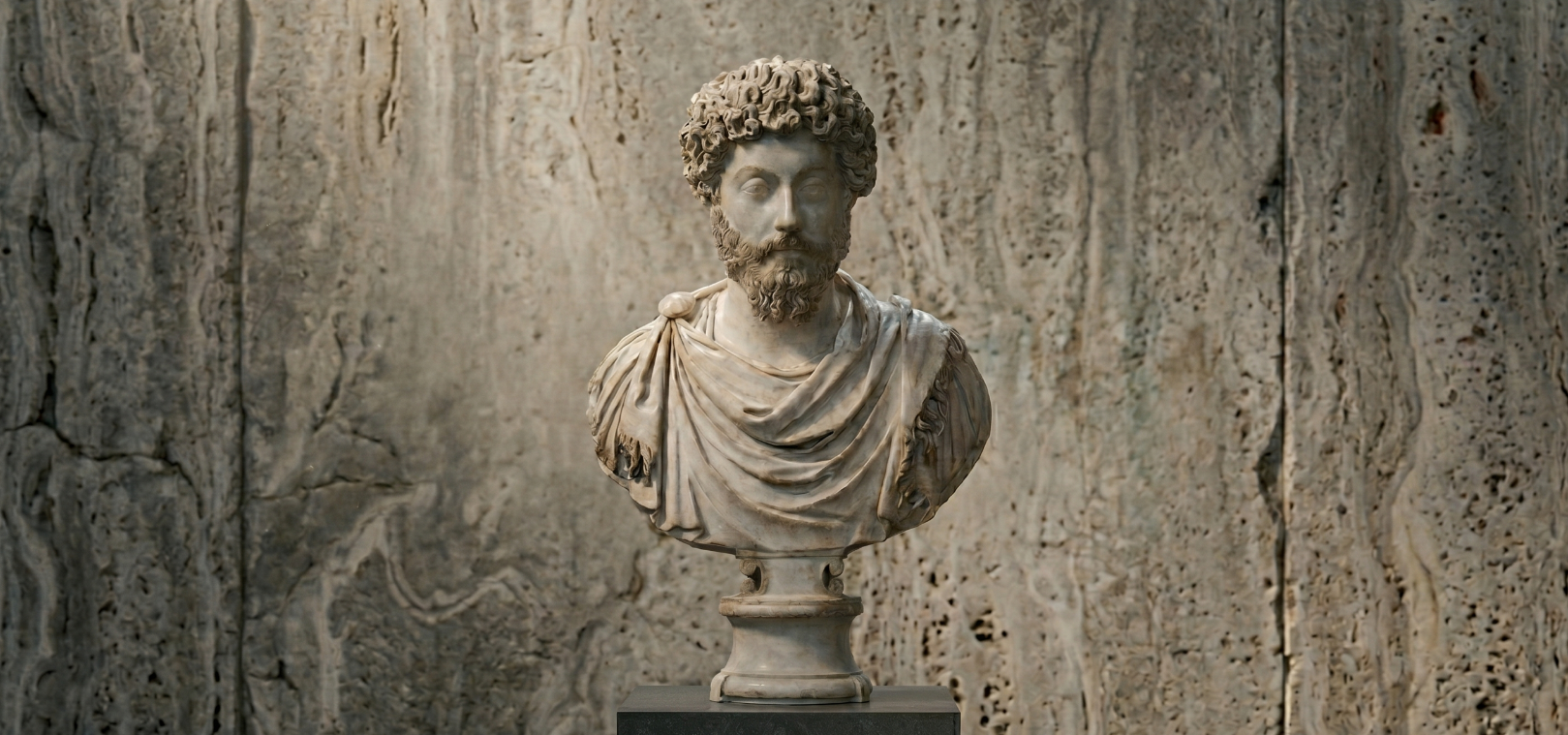
This article contains:
- Introduction to Stoicism
- The History of Stoicism
- Who were the Stoics?
- What are the main principles of Stoic philosophy?
- What are ways people practice Stoicism today?
- Where can I learn more about Stoicism?
Why Stoicism Still Matters in 2026
Stoicism is everywhere right now. From bestselling books and viral TikToks to NFL locker rooms and Silicon Valley boardrooms, this 2,300-year-old philosophy has become one of the most talked-about frameworks for living a good life. And for good reason.
In a world of constant notifications, endless comparison, and mounting anxiety, Stoicism offers something rare: a practical system for finding calm, clarity, and purpose. It does not ask you to retreat from the world. It gives you tools to engage with it more skillfully.
If you have been curious about Stoicism but were not sure where to start, this guide will walk you through its origins, its core ideas, the thinkers who shaped it, and how you can put it into practice today.
What Is Stoicism? A Simple Definition
At its core, Stoicism is a philosophy designed to help people live well. Founded in Athens around 300 BC, it teaches that lasting happiness comes not from wealth, status, or circumstances, but from cultivating wisdom, courage, justice, and self-discipline.
The Stoics believed that while we cannot control what happens to us, we can always control how we respond. That single insight has proven powerful enough to endure for over two millennia.
Stoicism is not about suppressing emotions or becoming cold and detached (a common misconception). It is about developing the inner resilience to experience life fully without being overwhelmed by what you cannot change.
A Brief History of Stoic Philosophy
Stoicism was born in a city teeming with competing ideas. In the Athens of 300 BC, you could walk down the street and hear Epicureans arguing for pleasure as the highest good, Cynics rejecting social conventions entirely, and Platonists debating the nature of reality.
Into this mix stepped Zeno of Citium. After losing everything in a shipwreck near Athens, Zeno turned his misfortune into a fresh start. He studied with the leading philosophical schools, synthesized what resonated, and eventually began teaching his own philosophy on the Stoa Poikile, a painted colonnade in the Athenian marketplace. The word "stoic" comes from that porch.
Over the next five centuries, Stoicism evolved from an academic school into a living practice adopted by people across the Roman Empire, from enslaved people to emperors. That range is part of what makes it remarkable. Stoicism was never just theory. It was always meant to be lived.
The Great Stoics: Four Thinkers Who Shaped the Philosophy
Marcus Aurelius (121-180 AD)
Marcus Aurelius ruled the Roman Empire for nearly two decades, commanding one of the most powerful civilizations in history. And yet, each night, he sat down to write private journal entries wrestling with how to be patient, how to be fair, and how to handle frustration.
Those private writings were never meant for anyone else. They were eventually collected and published under the title Meditations, and they remain one of the most widely read philosophy books in the world. What makes them powerful is their honesty. Here is a man with unlimited power, reminding himself not to waste his time on pettiness.

Seneca (4 BC - 65 AD)
Seneca was a statesman, playwright, and writer whose essays on topics like anger, grief, the shortness of life, and the value of friendship read as if they were written yesterday. He had an unusually accessible style that makes his work the best entry point for most people new to Stoicism.
His Letters to Lucilius covers practical advice on everything from how to handle a noisy neighborhood to how to face your own death with composure. These are not abstract lectures. They are letters to a friend, filled with warmth and wit. Listen to why Seneca offers some of Tim Ferriss’ favorite life hacks here - The Tao of Seneca.
Zeno of Citium (334-262 BC)
As the founder of Stoicism, Zeno established the school's core framework. Relatively few of his writings survive, but his legacy lives through every Stoic who came after him. He demonstrated one of the philosophy's central lessons through his own life: that setbacks (like losing everything in a shipwreck) can become the catalyst for something meaningful. He would teach his theory on the Stoa Poikile (a famously painted porch in Athens), and it is from this Greek word for porch “stōïkos” that the term Stoicism came.
Epictetus (50-135 AD)
Born into slavery, Epictetus gained his freedom and went on to become one of the most influential teachers in the ancient world. His central teaching is one of the most quoted ideas in all of philosophy: some things are within our control and some things are not, and wisdom lies in knowing the difference.
That principle became the foundation of the Serenity Prayer and has influenced everyone from cognitive behavioral therapists to military resilience trainers.
The Core Principles of Stoicism
1. Focus on What You Can Control
This is the foundational idea. The Stoics divided everything in life into two categories: things within your control (your thoughts, your choices, your effort) and things outside your control (other people's behavior, the economy, the weather, the past).
Most suffering, they argued, comes from treating the second category as if it were the first. When you catch yourself agonizing over something you have no power to change, you are spending energy that could go toward something productive.
The practice is simple but not easy: each time you feel frustrated or anxious, ask yourself whether the source is within your control. If it is, take action. If it is not, redirect your attention.
2. Virtue Is the Highest Good
The Stoics identified four cardinal virtues: wisdom (knowing what truly matters), courage (doing the right thing even when it is hard), justice (treating others fairly), and temperance (exercising self-restraint).
They believed that a person who cultivates these virtues will live a good life regardless of external circumstances. You do not need wealth, fame, or perfect health to live well. You need the strength of character to respond to whatever comes with integrity.
3. Practice Negative Visualization
The Stoics regularly imagined losing the things they valued most. Not to cultivate anxiety, but to cultivate gratitude. When you remind yourself that your health, your relationships, and your time are temporary, you stop taking them for granted.
This practice, which the Stoics called premeditatio malorum (the premeditation of evils), also reduces the shock when difficulties do arrive. If you have already considered how you would respond to a setback, you are better prepared to handle it with composure.
4. Reframe Obstacles as Opportunities
Marcus Aurelius wrote that the impediment to action advances action, that what stands in the way becomes the way. This idea, popularized in modern times by Ryan Holiday's bestselling book The Obstacle Is the Way, is central to Stoic thinking.
When something goes wrong, the Stoic response is not to complain or catastrophize. It is to ask: what can this teach me? How can I grow from this? The Stoics did not welcome suffering, but they refused to let it go to waste.
5. Remember That Life Is Short
The Stoics practiced memento mori, regularly reminding themselves that life is finite. Far from being morbid, they found this practice liberating. When you remember that your time is limited, trivial annoyances lose their grip. Petty grudges feel less worth holding. And the things that truly matter come into sharper focus.
Seneca put it simply: it is not that we have a short time to live, but that we waste a great deal of it.
How People Practice Stoicism Today
Stoicism has experienced a remarkable revival in the 2020s. Ryan Holiday's books (The Obstacle Is the Way, Ego Is the Enemy, Discipline Is Destiny, Right Thing Right Now) have sold millions of copies. The Daily Stoic newsletter reaches over a million subscribers. And Stoic ideas have found their way into therapy, sports psychology, and leadership training.
Here are some of the most common ways people incorporate Stoic principles into daily life:
Morning reflection. Many modern Stoics begin their day by journaling about what lies ahead and how they intend to show up. Marcus Aurelius used this practice to prepare himself for difficult people and situations before they arrived.
Evening review. At the end of the day, review how you responded to challenges. Where did you act with wisdom and patience? Where did you fall short? This is not about self-criticism. It is about honest self-assessment in the service of growth.
Voluntary discomfort. Seneca was known to practice days of deliberate simplicity, eating plainly and wearing rough clothing, to remind himself that comfort is a preference, not a need. Modern practitioners might take a cold shower, fast for a day, or sleep on the floor to build resilience.
The view from above. When something feels overwhelming, the Stoics recommended zooming out. Imagine looking at your life from a great distance. How significant will this problem be in a year? In ten years? This perspective shift can dissolve anxiety remarkably quickly.
The dichotomy of control check-in. When stress rises, pause and sort the situation into what you can and cannot control. Let go of the second category. Put your energy into the first.
Stoicism and Modern Psychology
Stoic ideas are not just philosophical concepts. They are clinically validated. Cognitive Behavioral Therapy (CBT), one of the most evidence-based approaches to treating anxiety and depression, was directly inspired by Stoic philosophy.
The core insight of CBT mirrors Epictetus almost exactly: it is not events themselves that disturb us, but our judgments about them. By examining and reframing unhelpful thought patterns, both CBT and Stoicism help people break free from cycles of rumination and reactivity.
If you have ever worked with a therapist who helped you notice catastrophic thinking or challenge worst-case assumptions, you have already practiced something the Stoics were teaching 2,000 years ago.
Start Your Own Reflection Practice
One of the most accessible ways to begin practicing Stoicism is through daily reflection. Marcus Aurelius' Meditations is, at its heart, a reflection journal. He used writing as a tool to process challenges, reconnect with his values (cue our the Holstee Manifesto), and hold himself accountable to the person he wanted to be.
You do not need to write lengthy essays. Even a few minutes of structured reflection each evening can create meaningful shifts over time.
Holstee's Reflection Cards were designed with this kind of practice in mind. Each card offers a thoughtful prompt that invites you to pause, notice, and consider what matters most. They are a simple way to build the kind of self-examination the Stoics valued without needing to design your own practice from scratch.
If you are drawn to the Stoic emphasis on living with intention, you might also explore The Flourishing Life, Holstee's community built around reflection, connection, and intentional living.
Where to Learn More About Stoicism
Books:
- Meditations by Marcus Aurelius (Gregory Hays translation recommended)
- Letters from a Stoic by Seneca
- The Enchiridion by Epictetus
- A Guide to the Good Life: The Ancient Art of Stoic Joy by William Irvine
- The Obstacle Is the Way by Ryan Holiday
- Discipline Is Destiny by Ryan Holiday
- How to Be a Stoic by Massimo Pigliucci
Online:
- The Daily Stoic — daily Stoic meditations and essays
- r/Stoicism on Reddit — active community discussion
- Stanford Encyclopedia of Philosophy — Stoicism — academic overview
- How to Be a Stoic by Massimo Pigliucci
Frequently Asked Questions
What is the main idea of Stoicism?
Stoicism teaches that lasting happiness comes from developing wisdom, courage, justice, and self-discipline rather than chasing external rewards. Its central practical insight is that while we cannot control what happens to us, we can always control how we respond.
Is Stoicism a religion?
No. Stoicism is a philosophy of life, not a religion. It has no worship requirements, no sacred texts in the religious sense, and no institutional structure. People of any faith (or no faith) practice Stoicism. Some ancient Stoics held beliefs about divine providence, but modern practitioners typically focus on the philosophy's practical and ethical teachings.
How do I start practicing Stoicism?
The simplest entry point is daily journaling. Spend five minutes each evening reflecting on how you responded to the day's challenges and where you could improve. From there, try reading Meditations by Marcus Aurelius or Letters from a Stoic by Seneca. Both are short, accessible, and immediately practical.
What are the four Stoic virtues?
Wisdom (understanding what truly matters and making sound judgments), courage (doing the right thing despite fear or difficulty), justice (treating others with fairness and compassion), and temperance (exercising moderation and self-control in all things).
Does Stoicism mean suppressing your emotions?
This is the most common misconception. Stoicism is not about becoming emotionless. It is about not being controlled by destructive emotional reactions. The Stoics encouraged feeling deeply while maintaining the clarity to respond thoughtfully rather than react impulsively.
What is the difference between Stoicism and stoicism (lowercase)?
Stoicism (capitalized) refers to the ancient Greek and Roman philosophical tradition. The lowercase "stoicism" is the colloquial English word meaning emotional toughness or indifference. The two are related but not the same. The philosophical tradition is far richer and more nuanced than the popular usage suggests.
___________________________________________
Written by Taylor Kreiss. Taylor writes about positive psychology to help people live their best lives! See more of his work and learn more about Taylor on his site.