It happens to me often, and usually unconsciously. I'll learn that a former colleague or classmate just bought a beautiful new house or got an exciting promotion — and immediately I'll begin to compare my life with theirs.
The pull is so automatic it can feel like the only honest reaction. But there's a name for what's happening, a body of research behind it, and — happily — a set of practices that can loosen its grip.
What is Social Comparison Theory?
Social comparison theory is the idea that we evaluate ourselves by measuring our abilities, opinions, and circumstances against those of other people — especially the people closest to us in age, career, and background. The theory holds that this comparison is fundamental to how we form a sense of self, but that it can also be a major source of anxiety, envy, and dissatisfaction.
Leon Festinger and the 1954 origin
The phrase comes from social psychologist Leon Festinger, who published A Theory of Social Comparison Processes in 1954. Festinger argued that humans have a basic drive to assess themselves accurately, and when objective standards aren't available, we turn to other people as our reference points. He found that our "comparison targets" are most often people in our orbits — close to us in age, career, and/or background. We don't tend to compare ourselves to a billionaire on the other side of the world; we compare ourselves to the colleague one cubicle over.
Upward Social Comparison
Upward comparison is when you compare yourself to someone in a perceived "higher" position when it comes to status, wealth, education, ability, or relationships.
This might spark motivation in you ("My classmate got an A on the test… I'll study harder next time so I can, too."), and it can also fuel jealousy ("It's not fair that my brother gets to go on so many amazing vacations every year and I don't.").
The same comparison can produce either outcome — the difference is largely about whether you see the gap as something you can close or something you've been excluded from.
Downward Social Comparison
Downward comparison is when you compare yourself to someone in a perceived "lower" position. It can help you realize how fortunate you are ("Wow, I am so glad that hasn't happened to me!"). It can also lead you to be scornful or judgmental of seemingly "lower status" people who might be facing challenges unknown to you ("She needs to really get her act together…").
Downward comparison is sometimes a form of self-protection — a way of bolstering self-worth when we feel threatened. Used occasionally, it can offer perspective. Used reflexively, it tends to make us less generous with the people around us.
Why social media makes comparison worse
It's enough that humans already have a tendency to make these types of comparisons, but social media takes it to the next level. Not only does social media expose us to the lives of many more of our peers than we would have been aware of otherwise — we see only very narrow and highly curated views of those lives. The vacation photo, not the credit card bill. The promotion announcement, not the late nights. Our minds are working with incomplete data and treating it as if it were the full picture.
How to stop comparing yourself to others
So how can you minimize the toxic effects of comparison? Here are three practices that help us:
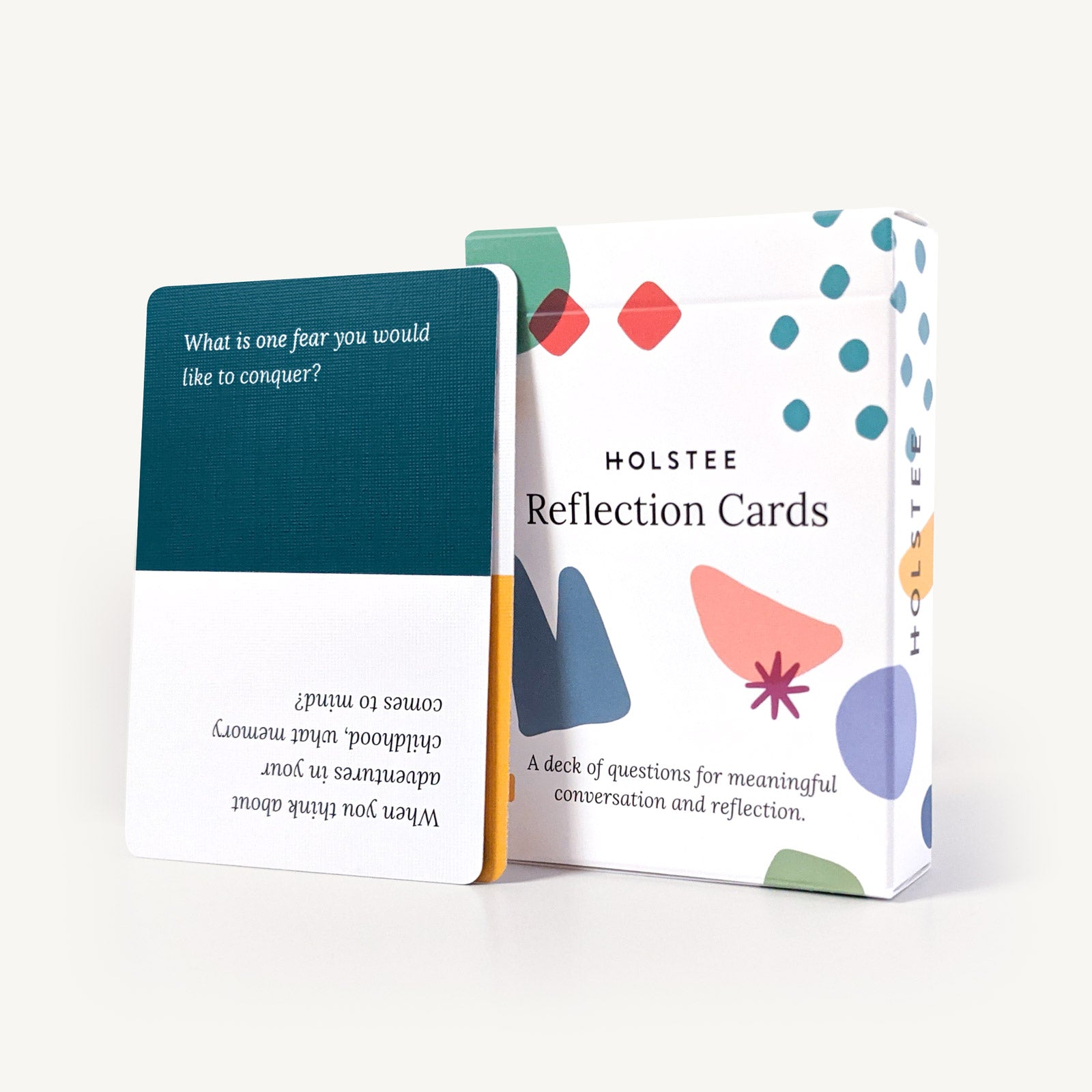
1. Compare yourself to… yourself. Define success on your terms, set your own goals, and measure progress against where you've been and where you want to go. Our Reflection Cards are built around questions that bring you back to your own measure of a good life — a small daily ritual to keep your scoreboard, not someone else's.
2. Identify your values. When we envy what others have, it often comes at the expense of losing sight of what's actually important to us. Don't let societal ideas of success and happiness lead you away from your personal values. Our Manifesto Collection is rooted in this — a daily reminder of the values you want to live by, not the ones the algorithm is selling.
3. Practice gratitude. Gratitude offers us perspective and reminds us of all the truly wonderful things about our lives as they are. Even a few minutes a day — naming three things you're grateful for, or noticing one small thing you usually rush past — quietly retrains the attention away from what you lack. Our post on enjoying the little things is a good place to start.
If you're looking for a community that practices this kind of attention together, our Flourishing Life membership is built for it.
Stay warm,
Dave Radparvar
Co-Founder, Holstee & Reflection.app