Mindful Matter

Atomic Habits.
“True behavior change is identity change. You might start a habit because of motivation, but the only reason you’ll stick with one is that it becomes part of your identity.” - James Clear How do we take all the motivation that is universally felt each January and make it stick for the long haul? In his new book Atomic Habits, habits expert James Clear offers a compelling answer: “Improvements are only temporary until they become part of who you are.” He explains with some examples: “The goal is not to read a book, the goal is to become a reader. The goal is not to run a marathon, the goal is to become a runner. The goal is not to learn an instrument, the goal is to become a musician.” This really connected with me because it shows how a small shift in language can move us from a one-off goal (what we want to do) to a real, lasting intention (who we want to be). More than wordplay, this practice is backed by science. James references a study in The Proceedings of the National Academy of Sciences which found that a person who self-describes as a ‘voter’ is far more likely to vote than a person who just said ‘voting’ is something they want to do. As a team, we were so impressed with the wisdom in this book that we reached out to ask James a few more questions and dedicated one of the sections in this month’s Intention Guide to sharing more of it with our members. To who we are and what we are becoming, Mike RadparvarCo-Founder, Holstee
Learn more
The joy of a new hobby.
Over the holidays, I took some time to complete my Reflection Journal with my wife Jess. We tackled the sections over the course of a few days, regrouping every so often to share our answers with each other. My favorite part of the process was going through the first few pages, where we wrote down the highlights and lowlights from each of the past 12 months. It's my favorite part because I have a notoriously bad memory. By reviewing my journal, calendar, and photos month-by-month, I’m able to remember what happened over the past year and think about how those experiences have impacted me. One thing that stuck out to me while doing this exercise was the unexpected joy that came from a new hobby I picked up this year. On May 27, I bought a skateboard. I know exactly what day it was because that was also the day Mike's daughter Mala was born. The same day that my brother entered parenthood, I reached back to my childhood — I remember my parents laughing at the symbolism :-). I told a few friends that I wanted to pick up skateboarding again after some 20ish years off the board. Some got excited about the idea and told their friends. Before I knew it, we had brought together a small group of 30+ year olds with shiny new skateboards, relearning how to ride and practicing tricks. If the weather was nice or someone had the day off, we would message the group and whoever could join would. Throughout the year, I’d write about my skateboarding sessions in my journal. And looking back, I can tell from the energy in those posts — and the sheer quantity of them — what a big role skateboarding played in my life. When I shared this realization with Jess, we tried to break down exactly what it was about skating that made it so enjoyable and fulfilling. It was pursuing something outside of my comfort-zone (that delicious combination of fear and courage). I felt empowered by the encouragement and support from new friends. I was able to deepen some of my relationships. I was doing something that challenged me mentally and physically. I felt that I was making progress towards a new skill and could clearly see the results of my effort. I also realized that I wasn’t just feeling joy while skating, but that the energy spilled over into other areas of my life. The days I went skating became the days I had the most energy, I felt the most creative, and I felt the most alive. With this insight in mind, Jess and I are prioritizing “play” as we set our goals and intentions for 2019. For me, this means more skating, but also being open to other unexpected hobbies. For Jess, it’s making time for creative outlets like writing and weaving. What are your intentions and goals for the year ahead? Dave RadparvarCo-Founder, Holstee
Learn more
Start by slowing down.
There is no point in reading a poem in a rush. There is no reward in skimming or reading its summary. The magic of poetry, like most art, is that if we allow ourselves to slow down enough for it to capture our full attention, it has the power to transport us — to a new world, to someone else's perspective, to a different state of mind. But for this magical moment to occur, we need to prepare ourselves. We need to be intentional about giving both our time and our attention. We need to tear down the walls of distraction, fear, and skepticism, making way for the words and wisdom to slowly find their way to our hearts. Beginning with January's Intention Guide (also available as a PDF download), we have updated our monthly guides from cover to cover. We start each new guide with a poem we've curated, as a reminder to slow down and ground your monthly reflection. We spend so much of our lives speeding up so we can move on to the next thing — but sometimes the most precious moments are the ones that slow down time. Wishing you many such moments this year, Dave RadparvarCo-Founder, Holstee
Learn more
Real connection.
A few years ago, Holstee shifted from having a Brooklyn-based office to being a decentralized team with everyone working remotely. While it’s offered us a lot of flexibility and has overall made us more productive, it has also meant that I spend quite a lot of time in front of a screen every day, interacting with the team online. This has made time spent in person so much more important. But despite my best efforts to reduce screen time, there is still plenty of it. And when I feel a bit lonely while working from home, I may look to social media for a quick surge of connectedness. After getting lost in a series of buzz-worthy articles, vacation photos, and posts from people I’m not sure I’ve ever even met in person, I become a more judgmental and isolated version of myself, feeling emptier and more disconnected. No matter how hard we try, technology can’t replace real human connection. What I do know, is that when I am able to avoid the temporary social media fix and instead schedule time with the people I care about (whether that’s going on an adventure or having a meaningful conversation) I feel much more than a social sugar rush. I feel full, connected and grateful for the relationships I have in my life. Wishing you a holiday season filled with real connections with the people you love. Mike RadparvarCo-Founder, Holstee
Learn more
Some perspective.
One of the most powerful books I’ve read is “The Untethered Soul: The Journey Beyond Yourself” by Michael Singer. I recently took some time to reread some of my favorite parts and once again I was left feeling grounded and refreshed. This passage felt particularly relevant this month: “Walk outside on a clear night and just look up into the sky. You are sitting on a planet spinning around in the middle of absolutely nowhere. Though you can only see a few thousand stars, there are hundreds of billions of stars in our Milky Way Galaxy alone. In fact, it is estimated that there are over a trillion stars in the Spiral Galaxy. And that galaxy would look like one star to us, if we could even see it. You’re just standing on one little ball of dirt and spinning around one of the stars. From that perspective, do you really care what people think about your clothes or your car? Do you really need to feel embarrassed if you forget someone’s name? How can you let these meaningless things cause pain? If you want out, if you want a decent life, you had better not devote your life to avoiding psychological pain. You had better not spend your life worrying about whether people like you or whether your car impresses people. What kind of life is that? It is a life of pain. You may not think that you feel pain that often, but you really do. To spend your life avoiding pain means it’s always right behind you.” The psychological pain Singer refers to is the constant internal chatter we all hear in our heads. Sometimes that voice can be encouraging, but more often than not it's resurfacing thoughts from the past and future that do nothing other than take us away from the present moment. It is the manifestation of our anxieties. Singer reminds us that there is a way beyond this pain. We need to be able to see our thoughts, instead of be our thoughts. This is the “untethering” of our being from our ego. This quote from the book sums it up nicely: “There is nothing more important to true growth than realizing that you are not the voice of the mind — you are the one who hears it.” Perspective is powerful — which is why we dedicate a whole month of the Holstee Membership to Reflection, one of the best ways to gain perspective. Like looking out on the night sky, reflection gives us distance from what we experience, allowing us the space to look at our lives openly, honestly, and without judgement. Sending love from my soul to yours, Dave RadparvarCo-Founder, Holstee P.S. If you haven’t checked it out yet, our 36-page Guided Reflection Journal is an incredible framework for looking back on the last year. Using it over the holiday break to reflect on the year is one of my favorite personal annual traditions.
Learn more
The greatest gift.
Day by day and year by year, we race through life — running around on earth, while the planet dances in circles around the sun. But from a few stars away, the earth looks still. Our lives, our joy, our worries, our collective existence — all unidentifiable. What is the meaning of it all? It’s a cliché question, but I used to think about it a lot. I would stress about it, thinking that if I could not figure out the meaning of life, how could I ever know if I’m making the right decisions? One day, my mother said something that really changed how I experience the world. She said: "Life is not a problem to be solved, it is a gift to be enjoyed." Simple and profound. I come back to her words often. It helps me put the biggest decisions I face into perspective. When we look at our life like it’s a problem, we try to find ways to fix it. But what if this life, this existence, isn't a problem that needs solving? What if it’s a gift? A gift that reveals itself a bit more with each passing day. All we need to do is stop and look around to realize this life is pretty amazing. Dave RadparvarCo-Founder, Holstee P.S. I've tried to find the original source for my mother’s words of wisdom. Søren Kierkegaard is often attributed with a variation of the quote, but it is not cited in any of his published works. The earliest version I could find is from Dutch philosopher J. J. "Koos" van der Leeuw in his work, "The Conquest of Illusion" (1928). I found the whole paragraph stunning: "The mystery of life is not a problem to be solved; it is reality to be experienced. Beware of the man who claims to have solved the problem of life, who would explain its complexities and, with deadly logic, build a system in which all the facts of our existence may be pigeon-holed and neatly stored away. He stands condemned by his own claim. The child which sees wonder in all the world around it, to whom the shells with which it plays on the beach are objects breathless excitement and thrilled amazement, is nearer to divine truth than the intellectualist who would strip a world of its mystery and takes pride in showing us its anatomy in ruthless dissection. For a while it may satisfy evolving man to know that the splendors of a sunset are but the breaking of light-rays in a moist atmosphere; he will come to realize that he may have explained the method, but has not touched the mystery at all. Recovering from the sureness of youth, never doubting itself, awakened man returns to the wonder of childhood and once again sees a world, which, as the years pass by, deepens in mystery and beauty, but is never exhausted or explained."
Learn more
Feeling rich.
“Practicing gratitude means recognizing the good that is already yours. If you’ve lost your job, but you still have your family and health, you have something to be grateful for. If you can’t move around except in a wheelchair but your mind is as sharp as ever, you have something to be grateful for. If you’ve broken a string on your violin, and you still have three more, you have something to be grateful for.” - Alan Morinis, founder of the Mussar InstituteI came across this passage after friend and divinity scholar Casper ter Kuile (who you may remember from the Care of Souls Reflections post) recently shared Mussar, a movement within Judaism focused on the importance of developing as an individual. It is a powerful reminder, and one that closely parallels the wisdom of Br. Steindl–Rast from one of our all-time favorite TED Talks. Alan goes on to share a quote from Pirkei Avot that really hit it home for me: “Who is rich? Those who rejoice in their own lot.” My interpretation: It doesn’t matter how much you have, if you can’t find the joy in what you have, you will never feel rich. Conversely, gratitude may not bring you more money or ‘nice’ things, but it just may make you rich. So with that, check out Holstee’s Guide to Getting Rich… aka, this month’s Gratitude Guide :-P Mike RadparvarCo-Founder, Holstee
Learn more
How do you compare?
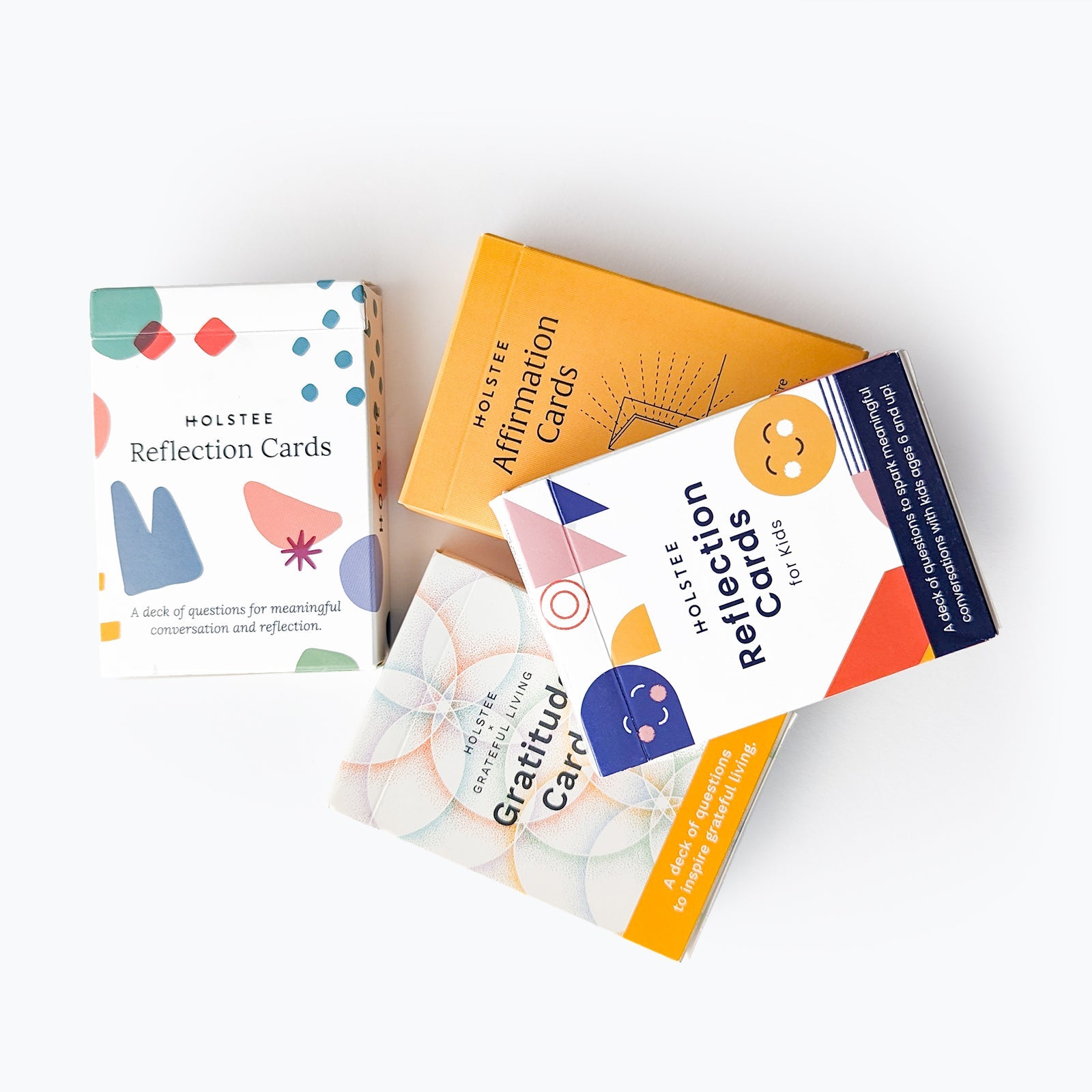
It happens to me often, and usually unconsciously. I'll learn that a former colleague or classmate just bought a beautiful new house or got an exciting promotion — and immediately I'll begin to compare my life with theirs. The pull is so automatic it can feel like the only honest reaction. But there's a name for what's happening, a body of research behind it, and — happily — a set of practices that can loosen its grip. What is Social Comparison Theory? Social comparison theory is the idea that we evaluate ourselves by measuring our abilities, opinions, and circumstances against those of other people — especially the people closest to us in age, career, and background. The theory holds that this comparison is fundamental to how we form a sense of self, but that it can also be a major source of anxiety, envy, and dissatisfaction. Leon Festinger and the 1954 origin The phrase comes from social psychologist Leon Festinger, who published A Theory of Social Comparison Processes in 1954. Festinger argued that humans have a basic drive to assess themselves accurately, and when objective standards aren't available, we turn to other people as our reference points. He found that our "comparison targets" are most often people in our orbits — close to us in age, career, and/or background. We don't tend to compare ourselves to a billionaire on the other side of the world; we compare ourselves to the colleague one cubicle over. Upward Social Comparison Upward comparison is when you compare yourself to someone in a perceived "higher" position when it comes to status, wealth, education, ability, or relationships. This might spark motivation in you ("My classmate got an A on the test… I'll study harder next time so I can, too."), and it can also fuel jealousy ("It's not fair that my brother gets to go on so many amazing vacations every year and I don't."). The same comparison can produce either outcome — the difference is largely about whether you see the gap as something you can close or something you've been excluded from. Downward Social Comparison Downward comparison is when you compare yourself to someone in a perceived "lower" position. It can help you realize how fortunate you are ("Wow, I am so glad that hasn't happened to me!"). It can also lead you to be scornful or judgmental of seemingly "lower status" people who might be facing challenges unknown to you ("She needs to really get her act together…"). Downward comparison is sometimes a form of self-protection — a way of bolstering self-worth when we feel threatened. Used occasionally, it can offer perspective. Used reflexively, it tends to make us less generous with the people around us. Why social media makes comparison worse It's enough that humans already have a tendency to make these types of comparisons, but social media takes it to the next level. Not only does social media expose us to the lives of many more of our peers than we would have been aware of otherwise — we see only very narrow and highly curated views of those lives. The vacation photo, not the credit card bill. The promotion announcement, not the late nights. Our minds are working with incomplete data and treating it as if it were the full picture. How to stop comparing yourself to others So how can you minimize the toxic effects of comparison? Here are three practices that help us: 1. Compare yourself to… yourself. Define success on your terms, set your own goals, and measure progress against where you've been and where you want to go. Our Reflection Cards are built around questions that bring you back to your own measure of a good life — a small daily ritual to keep your scoreboard, not someone else's. 2. Identify your values. When we envy what others have, it often comes at the expense of losing sight of what's actually important to us. Don't let societal ideas of success and happiness lead you away from your personal values. Our Manifesto Collection is rooted in this — a daily reminder of the values you want to live by, not the ones the algorithm is selling. 3. Practice gratitude. Gratitude offers us perspective and reminds us of all the truly wonderful things about our lives as they are. Even a few minutes a day — naming three things you're grateful for, or noticing one small thing you usually rush past — quietly retrains the attention away from what you lack. Our post on enjoying the little things is a good place to start. Comparison often shows up as the urge to fit in — to adjust yourself until you match the room. Belonging vs. Fitting In pulls apart why fitting in and belonging can feel identical from the inside while pulling in opposite directions. If you're looking for a community that practices this kind of attention together, our Flourishing Life membership is built for it. Stay warm, Dave Radparvar Co-Founder, Holstee & Reflection.app
Learn more
Release the tension.
I was thinking recently about tension. First, the literal concept of tension — how a rope gets tense when it’s pulled in opposite directions. The greater the distance or force between the two ends, the tighter the rope gets. Then, I started thinking about the tension in my life — the stress of feeling pushed and pulled by what is and what could be. I realized that the tensions are similar. If I am stressed about something, it’s usually because there’s a gap between my desired state and my reality. The further the distance between those two states, the less tranquil I feel. Instead, I feel stressed, twisted, and wound up. But similar to rope, there is no tension if the force from one side stops. So if I can acknowledge a wishful thought and recognize the desire in it, I can see that thought for what it is without being overtaken by it. I can let go of the “desire” side of my internal rope and be at peace with my reality. Releasing one end of the rope doesn’t mean we give up. But rather, we acknowledge the desire without letting it pull, or consume us. We can still strive for what could be, while being at peace with what is. Perhaps when we let go, our desired state will stop pulling away. Perhaps without feeling the need to pull away, it may even float in our direction. To letting go (but not giving up), Dave RadparvarCo-Founder, Holstee P.S. Our monthly membership helps people take a step back, decide what it is they truly want, and pursue that — instead of getting pulled around by the ropes of life.
Learn more