Mindful Matter

My creative writing process.
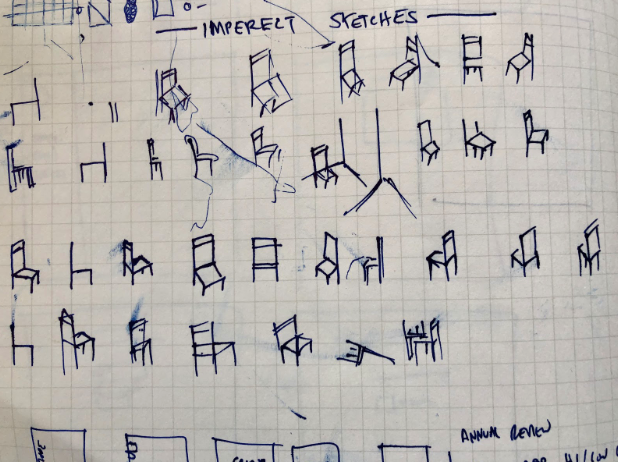
"Perfectionism is the voice of the oppressor, the enemy of the people. It will keep you cramped and insane your whole life, and it is the main obstacle between you and a shitty first draft." - Anne Lamott Last week, I shared about powering through my resistance to the creative process. Once I manage that, I typically hit a second obstacle: the intimidating weight of the first stroke. I become terrified of putting pen to paper and the risk of destroying what is an otherwise pristine and unadulterated page. I have gotten better at facing this challenge since I began “morning pages” — a practice of writing at least three pages of longhand, stream-of-consciousness thinking every morning, popularized by Julia Cameron’s “The Artist’s Way.” Through my morning pages, I’ve learned to write even if I have nothing to say. I literally write things like: “Good morning, morning pages day 10. I really have nothing to say today. I slept well, but still feeling a bit tired and am sitting here watching the steam float up from my tea.” Bored by my own writing, I sometimes catch myself daydreaming. But the moment I catch myself, I immediately write about it: “I just caught myself daydreaming about…” It's strange to catch yourself lost in thought about something trivial, then magnify that thought by writing about it. But it’s also an incredible way to release these kinds of thoughts onto a page and out of your head. Similar to meditation, writing gives us a lens into our monkey-minds and perspective into the power and unpredictability of our thoughts. I just keep writing and writing, getting all the surface-level clutter out, removing the blockages between my thoughts and my words. Eventually ideas start flowing more naturally and I begin to write a bit quicker — I stop overthinking and I just get it all out. Knowing that there’s plenty of time for editing and analytical thinking later, I focus on keeping that stream from my heart, to my mind, to my fingers, open and flowing. Dave RadparvarCo-Founder, Holstee P.S. Looking for more creative inspiration? Check out this month’s Creativity Kit:
Learn more
Fight the resistance.
When it comes to creating, I struggle with the same feeling of resistance I shared in our three-part series on finding creative inspiration. It’s a concept I learned from Steven Pressfield’s “The War of Art” (recap shared in this month’s Creativity Curated Resources for members). Resistance is the mind’s aversion to a task and the distractions it creates in order to avoid the task altogether. These distractions can show up in different ways for everyone. For me, resistance takes the form of an infinite flow of “urgent” tasks broadcast to the forefront of my mind. The moment I open a blank page is the exact moment I realize that I need to do something else… put in the laundry, clip my nails, see if the mail arrived, or vacuum that cobweb in the corner of the ceiling. The lengths my mind will go to avoid a blank page is pretty incredible. Through practice, I have gotten a lot better at realizing the unexpected ways resistance tries to hijack my creative time. I now do my best to label it for what it is, schedule the distracting to-do for later, and power through with my work. It’s not always easy, but it's a constant practice. How does creative resistance take shape in your life? What ways have you found to power through it? Dave RadparvarCo-Founder, Holstee
Learn more
Structured flexibility.
Some time after the rainforest adventure I shared a few emails back, my wife Setareh and I went to Amsterdam for our honeymoon. Before we left, I wanted to do my research, look up reviews, and make an itinerary so we could structure our limited time and not miss any of the gems hidden in plain sight.Setareh, on the other hand, felt that a trip like this was a rare moment for us to just let loose, be flexible, and explore this new beautiful city with open eyes. She preferred a more spontaneous approach that wouldn’t tie us to any kind of schedule.After some lively debate, we ultimately found ourselves agreeing to an approach we called structured flexibility. The concept is right in the name: have a general itinerary in mind, but be open to detours and random happenings that can’t be planned.In our case, it meant taking the time to research the neighborhoods we wanted to bike to and even some solid restaurants to have in our back pocket for when we got hungry — but it also meant letting go of the feeling that we had to do any of those things. For example, one day we were on our way to a museum when we spotted an epic outdoor farmer’s market. We decided to let go of our afternoon plans and walk the 5+ blocks of the market — and while we were exploring, I recognized Casey Neistat, an American filmmaker who came on my radar via his amazing video about biking the streets of New York City. We introduced ourselves and had a nice conversation about our respective travels through Amsterdam. Having a clear direction to the day got us going, but it was being open and having an adventurers’ mindset that made it particularly memorable.I don’t think this is revolutionary — but since it saved our honeymoon, I thought it was worth sharing with you.Till soon, Mike RadparvarCo-Founder, Holstee P.S. This is our last week exploring Adventure. Next week’s Holstee Membership dives into one of our favorite themes, Creativity!
Learn more
Chew on this.
"In Pala," she explained, "we don't say grace before meals. We say it with meals. Or rather we don't say grace; we chew it." ― Aldous Huxley, Island A couple years ago, when reading Island by Aldous Huxley, I was transported on a literary adventure to the utopian island of Pala. The book begins when an English journalist, Will Farnaby, is shipwrecked on a Pacific island with a unique set of spiritual, yet pragmatic, traditions. Take their example of saying grace, a Pala tradition that Will learns about from Shanta, a young child at the dinner table: "Grace is the first mouthful of each course — chewed and chewed until there's nothing left of it,” Shanta tells him. “And all the time you're chewing you pay attention to the flavor of the food, to its consistency and temperature, to the pressures on your teeth and the feel of the muscles in your jaw." This tradition reminded me of one of my favorite lines from the Holstee Manifesto: “When you eat, appreciate every last bite.” It’s a beautiful practice of slowing us down so we can fully experience and appreciate what we are eating. Whenever I can remember, I try to practice this tradition from Pala with my own twist. During the first bite of my meal, I chew slowly and intentionally. I try to recognize and taste each ingredient, thinking about how far that ingredient has traveled and the amount of effort and resources required for it to grow. I also add an element of gratitude, thanking each living being that made the bite possible. One of the best things about adventures — even the mini-ones we take by reading a good book or immersing ourselves in a great film — is the way they can bring deeper meaning to our everyday lives. What’s the last great book you read? What souvenir did you take away from it? (Journal your response in Reflection.app →) Dave RadparvarCo-Founder, Holstee & Reflection.app P.S. Thanks to Jonny and the wonderful Curious Humans newsletter for introducing me to this book a few years back!
Learn more
Just a hike in the rainforest, what could go wrong?
When I received this month’s Adventure Art by Matilda van der Walt, it immediately triggered a memory from a few years go. My (now) wife, Setareh, and I were on our first trip together in the Puerto Rican rainforest. On our way back from a beautiful hike, the skies suddenly opened up and down came the rain. The drops were so large, we could feel each one hitting our arms, shoulders and heads. The first minute or two was refreshing and fun. But soon, our clothes and bags were soaked and the cold started to hit us. We huddled together and tried to take shelter under some large leaves. Eventually the rain started to let up, so we decided to make a break for it in case it started up again. Halfway back, we noticed that the ankle-deep brook we had crossed while entering the rainforest was now a rapidly moving river. We would need to ford the river, Oregon Trail style. In the moment, getting caught in the rain and needing to swim across a rapid river felt really unlucky. But if you were to ask either of us now, we wouldn’t change anything about that day. It’s become the part of the trip we remember and laugh about the most. Though we rarely wish for unexpected setbacks, they do have a special way of spicing up an adventure. Because if everything goes smoothly, it’s not really an adventure, right? Mike RadparvarCo-Founder, Holstee
Learn more
This adventure may hurt.
I have been traveling a lot the last few weeks…for work, for pleasure, for family. While meaningful and enjoyable, it has also been intense. After arriving home this morning off a DC-Amsterdam red eye flight, I felt exhausted and out of sorts. My body had arrived but my mind and soul were still catching up, slowly making their way across the Atlantic like a piece of delayed luggage. I’ll be honest — the idea of writing this morning's email on the theme of Adventure was the last thing I wanted to do. Wouldn’t life be easier if I had just stayed home, kept my routines, and gotten a good night’s rest? Feeling tired and grumbly, I stared at my blank screen and wondered — what’s so important about adventure anyway? Soon enough, an image popped in my head of some graffiti I once saw tagged on the side of a building: “Adventure may hurt, but monotony will kill.” I remembered how much I’ve learned, grown, experienced, and changed through the travels and adventures I have been so fortunate to enjoy. It was a reminder, once again, that a good life isn’t always an easy life. The goal isn’t ease, it’s meaning. And meaning comes from challenges, from relationships, from taking chances, and from experiences that stretch you beyond your comfort zone — even if it’s just to a new restaurant, an unexplored area of town, or a different kind of meditation practice. Wishing you a meaningful journey, wherever your summer adventures take you, Dave RadparvarCo-Founder, Holstee Members: Check out this month’s Adventure Guide and Curated Resources!
Learn more
How much more do you need?
With this month’s theme of Simplicity, we are focused on determining what’s essential — and eliminating all the rest. Before we can know what is essential, though, we need to identify what we need to feel comfortable. Our consumption-driven world constantly tells us we need more. More money, more clients, more clothes… The challenge is, if we don’t know what we’re striving for, we’ll never be content with what we have. Challenge yourself to write down what would be enough for you. For example, if constantly striving for more money is a challenge, ask yourself: At what salary would I be comfortable (regardless of what my peers earn)? At what number of clients or amount of revenue would I feel comfortable turning down a project? At what level of savings would I feel comfortable taking time off? Take an inventory of other parts of your life where you're striving for more and reflect on what would be enough. Write it down and return to it when you are feeling that endless pull for more. Because if you don’t know where you are going, you will never know when you arrive. Who knows, you may find you are already there. Simply yours, Dave RadparvarCo-Founder, Holstee Members: Check out this month’s Simplicity Guide and Curated Resources for suggestions on simplifying everything from your finances to your tech.
Learn more
Dude, you don’t even need a wetsuit.
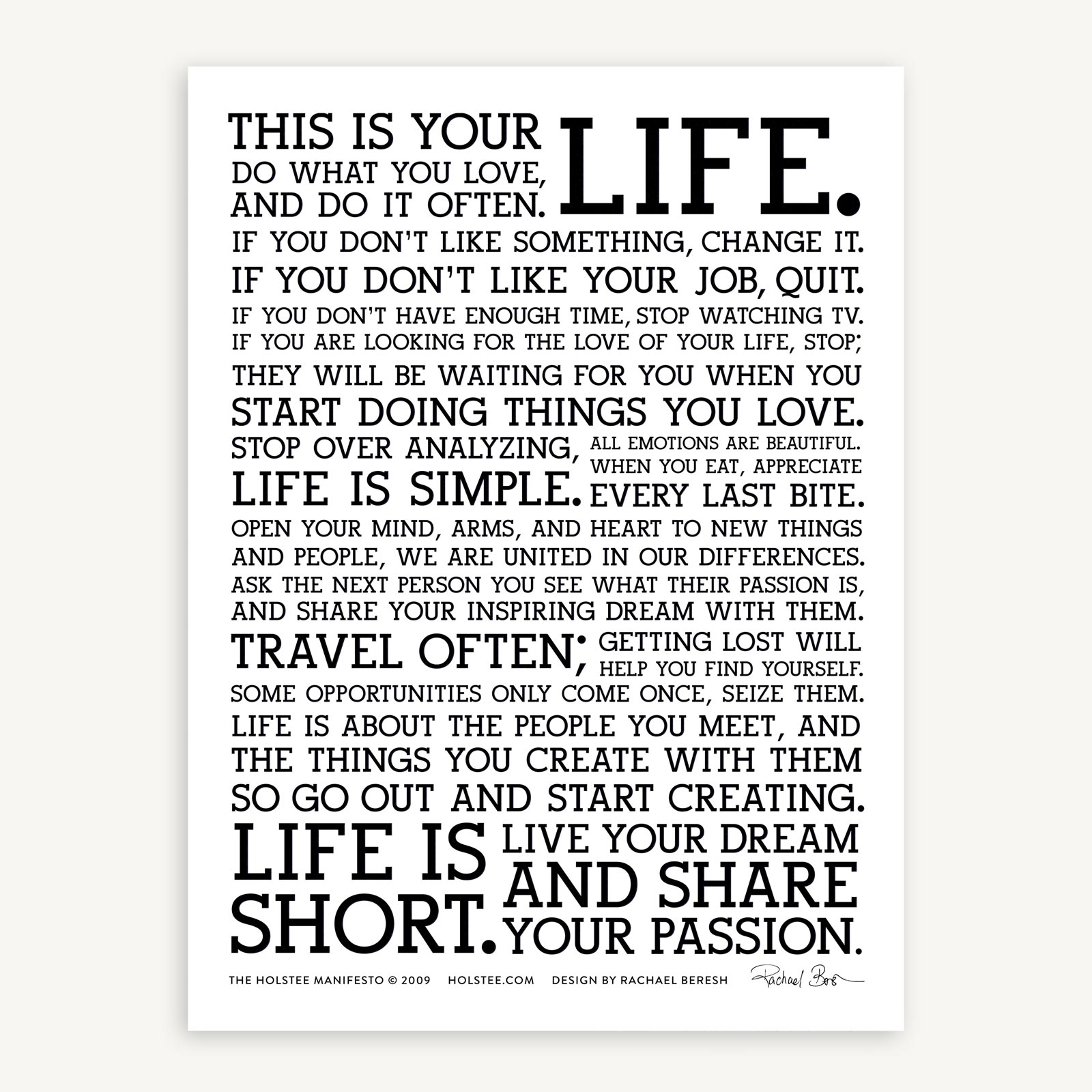
Stop over analyzing. Life is simple. — The Holstee Manifesto I’ve wanted to try surfing ever since moving to Ventura, California. Last summer, I decided it was time to give it a go. I started by researching wetsuits and learned everything I could about the different options. I asked for recommendations from friends and anyone I met who surfed. Every person had a different suggestion, each with a compelling reason. Within a month, I went into a dozen surf shops, read the backstories of countless wetsuit brands and ordered and returned multiple wetsuits (none of which ever made it to the ocean). By mid-August, I was no closer to getting in the water. The guy at my local surf shop must have sensed my indecisiveness after my 7th visit. He said to me, “Dude, you don’t even need a wetsuit. The water is so warm right now – just jump in.” Facepalm. I had spent so much time trying to figure out the perfect wetsuit that I had lost track of what I really wanted to do. It was a great reminder that sometimes the solution to a problem is far more simple than we allow it to be. I went straight to Mondos, the local beginner beach, and paddled out for the first time. Though I didn’t get to ride a wave, it was perfect. This month’s Simplicity Kit is kinda like that guy in the surf shop — a simple yet powerful reminder to focus on what matters most. Keep it simple, Mike RadparvarCo-Founder, Holstee P.S. In California, you do need a full wetsuit for the cooler months. I finally landed on a Vissla wetsuit and am happy with it — but more than anything I am happy that I finally paddled out!
Learn more
Essentialism
“If I didn’t have this opportunity, what would I be willing to do to acquire it?” - Greg McKeown This question from Greg McKeown’s book Essentialism: The Disciplined Pursuit of Less (one of the suggested readings in this month’s Curated Resources) has become a litmus test for us when deciding which opportunities, not already in our roadmap, to take on.It’s only recently that we’ve gotten comfortable saying “no.” We’re a small team, that thrives on going deep on select projects. Our natural inclination to jump into every incoming opportunity while helpful when starting out, has turned out to be less useful today as our goals and vision for Holstee become more clear.While we’re still open to new opportunities, we’re far more discerning about the ones we’re willing to invest our team’s limited time and effort into.A similar approach can be taken to declutter the physical items in our lives by asking “if I didn’t have this already, would I still choose to purchase it today?”In this month’s Simplicity Guide we explore methods for bringing simplicity into our lives so we can focus on what really matters. Mike RadparvarCo-Founder, Holstee
Learn more