Mindful Matter

How are you feeling right now?
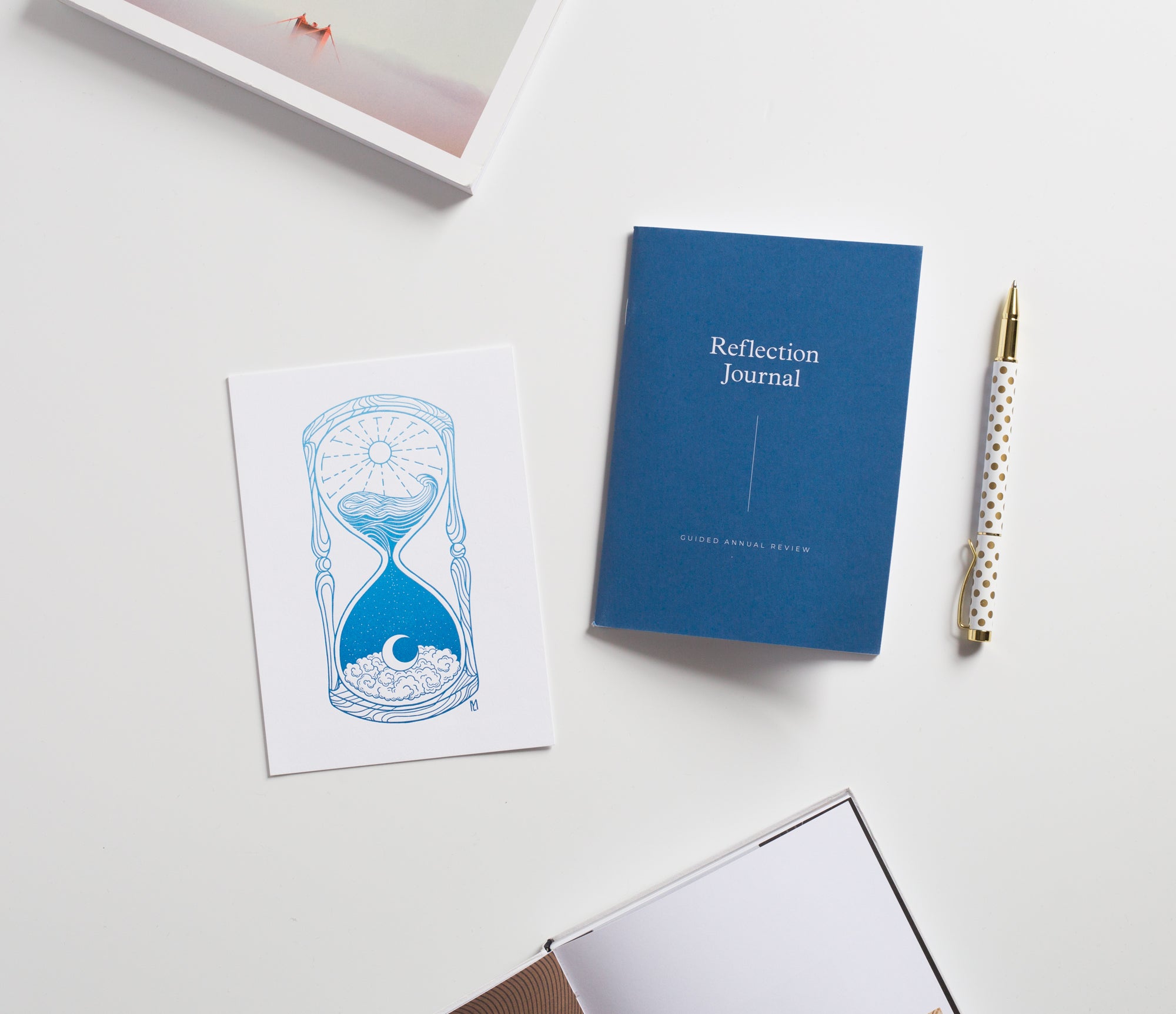
Whew, this week has been intense. I spent most of it pretty anxious. And every time I felt the unease of uncertainty bubble up, I found myself reaching for my phone. Now, after a week of checking incessantly to see the latest headlines, vote tallies, reactions, messages, and memes, my body seems to have adapted to this addictive behavior. For instance, this morning I picked up my phone to play some music but somehow found myself tapping open my news app. It took a minute or two of scrolling through the headlines before I remembered that I had initially picked up my phone for an entirely different reason. After realizing this, it also became clear that I have been consuming more — in this case, news — in order to drown out my own thoughts and feelings. So today I am taking some time to unplug from the news and reset my relationship with technology. I am remembering to return to the present moment and making space for my emotions. Every time I feel the urge or catch myself opening my phone’s news app, I will instead pop open my journal and answer a simple question: How are you feeling right now? I am feeling a strong sense of relief right now, but I am also feeling so much more. There is a lot to unpack and process from the last week — and in many ways, from the last four years. Join me and make time for your own thoughts and feelings today. Wishing you many moments of reflection and calm, Dave RadparvarCo-Founder, Holstee P.S. If you don’t already have a reflection practice, I invite you to check out our private journaling platform Reflection.app →
Learn more
How do you measure a successful life?
A few days ago I was walking and listening to some music when a song called “We Got Love” by Teyana Taylor came on. The song is upbeat, high tempo, and as the title suggests, it’s full of good vibes and, well… love :-). Near the end of the song, I heard an interlude (at 2:57) that I hadn't really listened to before. It was a heartfelt message from fellow musician Lauryn Hill, which I later learned was sent as a voice note to Taylor before the release of her new album. “Above all, you keep your clarity,You keep your focus,You keep your sense of love,And you keep your sense of purpose.Those are, they're integral, you know, they're key.…A lot of people define success differently...You know, for me, you can have everything,You can have all the money in the world,But if it's not enjoyable, if it's not sustainable,If you can't be a person of integrity while having all of these things —What does it matter? What does it mean? The value is internal.Your value is internal.” What an unexpected hit of inspiration, wisdom, and delight. And a perfect tribute to this month’s theme of Integrity. Media and materialism tempt us to use fame and fortune and other external signs as indicators of success. The truth is, as Hill says, we each have the ability — the choice — to define success for ourselves based on our internal values. I am beginning to think that perhaps integrity — the extent to which we live in accordance with our own values — is the best measure of a successful life. How does this definition of a successful life sit with you? How do you measure success in your life? Wishing you success by every measure, Dave RadparvarCo-Founder, Holstee
Learn more
My mantra for uncertain times.
I have been feeling a bit overwhelmed and out-of-sync lately. Maybe you have, too. The uncertainty is getting to me again, similar to how it did in March, and again in April. Like so many others, I am tired of not seeing my friends and family. I am tired of feeling grief for so many who have fallen ill or lost their lives. I am tired of saying let’s wait and see how things are next month. I am tired of feeling like life is on hold, and at the same time that it is passing me by. It’s not easy, but I keep reminding myself to return to the wisdom of the stoics and focus on what is in my control, not what is outside of it. Regardless of what is happening that is outside of my control, I can always choose how I react in the moment. It's not easy to remember — and it's even harder to put them into practice — but these three simple sentences have become my mantra in the past few days: I can be kind. I can be present. I can be grateful. I can be kind to my wife, to my neighbors, and on the phone with friends and family. I can be present with my son, with the books I read, with the tea I drink, and with the leaves falling outside my window. I can be grateful that no one in my family has been hospitalized due to COVID. I can be grateful that the grocery store remains open and is well stocked with food. I can be grateful that when things are challenging for me, there are people I can turn to and ask for help. In order to help me live these mantras, I connect them to my existing activities and thought patterns. When I am missing my friends and family, I remember to be kind to those near me. When I am thinking ahead to when it may be safe for our son, Shilo, to finally meet and hug his grandparents, I remember to be present with Shilo and shower him with the love and attention his grandparents would. When my glasses fog up from wearing a mask, instead of feeling frustrated, I try to remember to be grateful for my health and the health of loved ones. If you are also feeling overwhelmed with uncertainty, despair, and longing, know that you are not alone. We are all navigating this unique and uncertain time, each in our own way. These times are challenging. And exhausting. But I am certain of one thing: we will get through this, and we will be stronger for it. With kindness, presence, and gratitude, Dave RadparvarCo-Founder, Holstee P.S. I'd love to hear, how do you stay grounded during times of uncertainty? Share your thoughts and learn from others in our community forum for members. →
Learn more
Should we let the giraffes go?
The last time my wife and I took our daughter to the zoo, we had a great time. But while there, I couldn’t stop thinking. Even though this zoo was thoughtfully designed, it seemed that many of the animals, especially the larger mammals, had a certain sadness to them. I wondered if by going to the zoo, I was enabling something that possibly went against my values.Having just reviewed the Integrity Guide where we explore some basic concepts of Applied Ethics, I realized I was considering this dilemma through the lens of virtue ethics.Virtue ethics refers to moral decisions that are made according to the virtues that a person holds.In addition to virtue ethics, we cover two other approaches to ethical decisions in the guide:Deontology refers to moral decisions that are made according to a set of rules or a code of conduct upheld by a religion, profession, country, or other shared group. Utilitarianism refers to moral decisions that are made according to their “utility” or the happiness they produce; essentially, actions are moral as long as they produce good outcomes for the majority.Armed with these new perspectives, my inner deontologist got me to consider how this zoo was not breaking any laws. In fact, they were going above and beyond what any governing rules expected of them as a zoo, with spacious, naturalistic habitats, enrichment activities, and a loving staff that seems to really care about the animals’ well-being. Finally the utilitarian part of me chimed in. It started with an acknowledgment that the zoo is not ideal. It observed how the lives of these animals might be negatively impacted by it. But, it also got me to consider the number of people that a single zoo could inspire. If, as a society, more people learn about and appreciate animals, they might be more willing to help protect them in the wild, possibly even inspiring a future generation of Jane Goodalls. On a grand scale, wouldn’t all animals be better off if humans could see the majesty and importance of living beings beyond our own species?Reflecting on this was a great reminder that few things are entirely right or wrong.In everyday moral disagreements, hot takes and sound bites are entertaining, but they prevent us from thinking critically about our own view and from appreciating the many layers of an opposing view.While I am not prepared to declare virtue ethics, deontology, or utilitarianism as the winning approach, having different lenses to approach the same dilemma allowed me to better appreciate and create space for the nuance of the issue.To expanding perspective and appreciating nuance, Mike RadparvarCo-Founder, Holstee P.S. If you have been considering a Holstee Membership, this is the week! Sign up before Friday to lock in legacy rates before our rates increase. Learn more about our Membership →
Learn more
Antifragile.
“Wind extinguishes a candle and energizes fire.” – Nassim Nicholas Taleb In this month’s Online Member Gathering, we had a thought-provoking (and very timely) discussion about Nassim Nicholas Taleb’s book Antifragile: Things That Gain from Disorder. In it he describes a spectrum of resilience that objects, ideas, and even individuals fall on. The three markers on Taleb’s resilience spectrum are fragility, robustness, and, finally, antifragility. Fragile things (a champagne glass, a candle) are vulnerable to even the slightest force. Robust things (a rubber tire, a shield in battle) endure change, but with time and enough shock will break. Antifragile things (good ideas, evolution, and, unfortunately, wildfires) sustain and can even become stronger when challenged. Large-scale, negative forces like natural disasters, divisive politics, and a global pandemic can seem insurmountable, especially when occurring at once. This makes us, as individuals, feel vulnerable and fragile. In the current moment, each of us is being pushed to new limits, almost to the point of breakdown. However, these same forces also push us to create robust and even antifragile countermeasures: neighbors coming to one another's aid, renewed interest and involvement in our governing bodies, and novel approaches to old problems. Our ability and willingness to collectively solve problems are the building blocks of an antifragile society. If enough of us choose to respond to these challenging times through compassionate engagement, we could come out stronger than before. To our shared strength and antifragility, Mike RadparvarCo-Founder, Holstee
Learn more
Feel the feelings.
Like so many others, I was very saddened to hear of Ruth Bader Ginsburg’s passing this weekend. Justice Ginsburg beat cancer twice before it took her life on Friday. She was a force of nature and a determined advocate for women’s rights. Her passing comes at a time that is already full of challenging setbacks for many of us. In moments like this, moments when I feel an overwhelming sense of sadness and despair, I look over at a small print that my wife keeps on her desk from a past Holstee Membership Resilience kit, a collaboration with writer Courtney E. Martin and illustrator Wendy McNaughton. These last few months, I have found energy and inspiration in the words on the art print and I hope they provide the same for you now. Here is what it says: “This is your assignment. Feel all the things. Feel the hard things. The inexplicable things, the things that make you disavow humanity’s capacity for redemption. Feel all the maddening paradoxes. Feel overwhelmed, crazy. Feel uncertain. Feel angry. Feel afraid. Feel powerless. Feel frozen. And then FOCUS. Pick up your pen. Pick up your paintbrush. Pick up your damn chin. Put your two calloused hands on the turntables, in the clay, on the strings. Get behind the camera. Look for that pinprick of light. Look for the truth (yes, it is a thing—it still exists.) Focus on that light. Enlarge it. Reveal the fierce urgency of now. Reveal how shattered we are, how capable of being repaired. But don’t lament the break. Nothing new would be built if things were never broken. A wise man once said: there’s a crack in everything. That’s how the light gets in. Get after that light. This is your assignment.” To feeling the feelings and never losing hope, Dave RadparvarCo-Founder, Holstee P.S. This letterpress print is no longer available at Holstee, but Wendy has them available here. P.P.S. Also, a friendly reminder that this is the last week to save 20% on pre-orders for the Ritual Life Planner!
Learn more
Building up from common ground
“When people live in acute stress, either the cracks in their relationship will be amplified or the light that shines through the cracks will be amplified. You get an amplification of the best and of the worst.” - Esther Perel
Learn more
Q&A with Jessica Benhar
This month’s art is by Sydney-based illustrator, printmaker, and designer, Jessica Benhar. She loves libraries and finding inspiration from old books. Her work is infused with touches from the past and present. She hopes her illustration serves a reminder that "even when we strip ourselves bare, are honest and vulnerable, we can still feel and act whole. Staying true to ourselves at our core makes life simple." For a little more about what inspired this artwork, process, and their life, here's a short Q&A: Where is home for you? I was born in Wellington, New Zealand, and am currently based in Sydney, Australia. Proud to be both a Kiwi and an Aussie. What is your definition of a successful life? To be able to appreciate the simple pleasures in life. Working hard but also having quiet periods of doing nothing. Having the time to listen to good podcasts and books. Straying outside your comfort zone on a semi-regular basis. Spending time with people who inspire you. Owning only what you need. Using your talent and skills to figure out how to give back to the world. Describe your perfect day. I like to start my day with a good morning routine, which is always a work in progress. A walk in the morning, some YouTube yoga, and a slow breakfast. Remembering to take breaks throughout the workday and stretch. Listening to a podcast or two. Going climbing or training Brazilian Jiu Jitsu in the evening. Before bed I like to think of three things that made me happy during the day, even if it's something small like a good coffee or a kind comment. How did you get into design? In high school I remember picking out two brochures, one for an arts degree and one for a design degree. I tried to visualize in detail what it would look like to work in both fields and it felt right visualizing myself working in design. Where do you find inspiration? I collect a lot of inspiration at the library, I'll look through anything that has pictures, but I like natural history illustration, heraldry, children's books, woodcuts and engravings from 14th-century stuff through to now. I'll look through and photocopy or photograph things I like for future reference. I have a few folders at home packed to the brim with photocopies of awesome things I've found at the library. Sometimes when I'm walking through the street and I see something that looks cool, whether it's an architectural feature of a building or some poster taped up in the bathroom of a restaurant, I'll take a photo in case it's useful down the track. Instagram has also been really useful for providing endless inspiration, from tattoo artists to photography. Which designers or thinkers influence/inspire you? My favorite designers are often also artists, whose work tends to blur the line between both fields and has a timeless quality to it. Some of them include Eileen Mayo, Edward Bawden, Agnes Miller Parker, Escher, and Louise Fili. What was the inspiration behind this design? Integrity is the idea that even when we strip ourselves bare, are honest and vulnerable, we can still feel and act whole. Staying true to ourselves at our core makes life simple. At the moment, what is your favorite … Color: Always black Food: Homemade sourdough bread Song: New Light by John Ma yer Quote: "Our life is frittered away by detail. ...Simplify, simplify." - Henry David Thoreau
Learn more
The Power of Ritual
“Rituals make the invisible connections that make life meaningful, visible.” — Casper ter Kuile Growing up, the rituals in my life were mostly connected to religious practices. For example, in October, for Sukkot, we’d build a temporary structure (a Sukkah) in our backyard and enjoy meals and each other's company outside. It’s been decades since I’ve participated in a Sukkah building ritual, though I still appreciate the sentiments behind this practice: enjoying nature, the feeling of togetherness, and so much more. So, for the past five years, my wife and I have made a point to go camping in October. It’s among the most spiritually fulfilling things we do each year. But what makes it so? In his book, The Power of Ritual, author and Harvard Divinity School Fellow Casper ter Kuile suggests that “just about anything can become a spiritual practice—gardening, painting, singing, snuggling, sitting.” He continues, “We just need to be clear about our intention (what are we inviting into this moment?), bring it our attention (coming back to being present in this moment), and make space for repetition (coming back to this practice time and again). In this way, rituals make the invisible connections that make life meaningful, visible.” Casper’s words made it clear to me why our simple annual camping trip has become such a rich source of joy for our family. Casper’s research and writing on rituals, and the power they have to bring deeper meaning to our lives, really struck a chord with me and the Holstee team. So much so, in fact, that we have spent the last few months collaborating with Casper on developing a new tool to help people live with meaning: the Ritual Life Planner. The Ritual Life Planner is designed to help you identify, organize, and embrace the rituals in your life. We are still in the final phases of production and sampling, but we are too excited not to share a sneak peek! :-) If you would like to be kept in the loop about this product, please let us know by signing up on this early interest page! Here’s to finding and embracing meaning in all areas of life, Mike RadparvarCo-Founder, Holstee
Learn more