I love words that perfectly capture a feeling or experience (as you may remember from past Reflections on Arete, Mokusu, Kintsugi, and Shokunin Kishitsu). A few years ago, Julia — a member of the Holstee community in Austria — reminded me of another such word: sonder. It's stayed with me ever since.
What Does "Sonder" Mean?
Sonder (noun) — the realization that every stranger you pass is living a life as vivid and complex as your own.
Every person in the crowded train car, every driver in the next lane, every face in the background of your morning — each is the main character of a story as full, as messy, and as specific as yours. Sonder is the quiet jolt of remembering that.
Pronunciation: SON-der — rhymes with "ponder." First syllable stressed.
The Full Definition (from the Dictionary of Obscure Sorrows)
The definition that gives me goosebumps every time I read it is John Koenig's original, from his Dictionary of Obscure Sorrows:
sonder n. the realization that each random passerby is living a life as vivid and complex as your own — populated with their own ambitions, friends, routines, worries and inherited craziness — an epic story that continues invisibly around you like an anthill sprawling deep underground, with elaborate passageways to thousands of other lives that you'll never know existed, in which you might appear only once, as an extra sipping coffee in the background, as a blur of traffic passing on the highway, as a lighted window at dusk.
Read it slowly. It rewards a slow read. The "lighted window at dusk" line alone does more work than most paragraphs of philosophy.
Where Did the Word "Sonder" Come From?
Sonder was coined by John Koenig in 2012 for his Dictionary of Obscure Sorrows, a project that invents new words for feelings that exist but don't have names. The Dictionary started as a blog, grew into a YouTube channel with millions of views, and was published as a book by Simon & Schuster in 2021.
Koenig's stated goal for each entry is to "fill a hole in the language." Here's how he put it:
Each original definition aims to fill a hole in the language — to give a name to emotions we all might experience but don't yet have a word for. All words in this dictionary are new. They were not necessarily intended to be used in conversation, but to exist for their own sake; to give a semblance of order to a dark continent, so you can settle it yourself on your own terms, without feeling too lost — safe in the knowledge that we're all lost.
Etymology. The word is a constructed coinage, but it draws on two existing roots that give it the sound it needs:
- In German, sonder means "special" or "apart" — as in sonderbar ("peculiar") or Sonderfall ("special case")
- In French, sonder is a verb meaning "to probe, to fathom, to plumb the depths" — as in sonder l'âme ("to probe the soul")
The English word blends both senses: the feeling of suddenly perceiving that something apart from you is unexpectedly deep.
How the Word Feels in Daily Life
Sonder isn't a feeling you go looking for. It arrives. A few places people describe feeling it most strongly:
- Standing on a balcony at night, watching the windows of an apartment building light up one by one, each one a different person's evening.
- Sitting in an airport, realizing the 2,000 people around you are each about to fly toward someone, or away from something, that matters to them the way yours matters to you.
- Scrolling through a crowd of faces in an old photo and realizing every single person in the frame had a full interior life — and all of them are gone now, and none of them knew you'd be looking.
- Reading the name of a stranger on a gravestone and feeling, briefly, the weight of a life you'll never know anything about.
Using it in a sentence: "Sitting in the crowded train station, I felt a sudden wave of sonder — every face around me on their way to something that mattered to them as much as mine did to me."
This is what people sometimes call the "sonder effect" — the momentary vertigo of stepping outside your own story and noticing that you are a minor character, or a setting element, in thousands of other stories unfolding at the same time.
Why the Word Resonates
The definition gives me goosebumps every time I read it. It's such a concise and beautiful way to describe a reality I too often forget.
It's easy to experience life from the lens of our own eyes, with ourselves at the center of our narrative. But we are, of course, part of everyone else's stories as well — and these stories are deeply intertwined and interconnected. In subtle and sometimes not-so-subtle ways, we influence the trajectories of the people around us: those we have yet to meet, and even those we will never get the chance to encounter.
That's the shift sonder is asking for. Not to feel smaller. To feel accurately placed — one node in a network, rather than the center of the universe. The center-of-the-universe version is exhausting. The node version is oddly freeing.
And once you feel it, you tend to be kinder. Which may be the whole point.
Kinship — The Reason We Keep Coming Back to Words Like This
At Holstee, kinship is the catch-all theme we use for exploring all types of relationships. Words like sonder, kintsugi, and arete keep pulling us back because they give us language for experiences we all have but rarely name — and naming something is the first step to living it more deliberately.
Whether you realize it or not, you play a part in an endlessly-unfolding story. Not only that — you are writing your own script for it.
Make it a good one.

Dave Radparvar
Co-Founder, Holstee
If this post resonated, a few ways to keep the thread going:
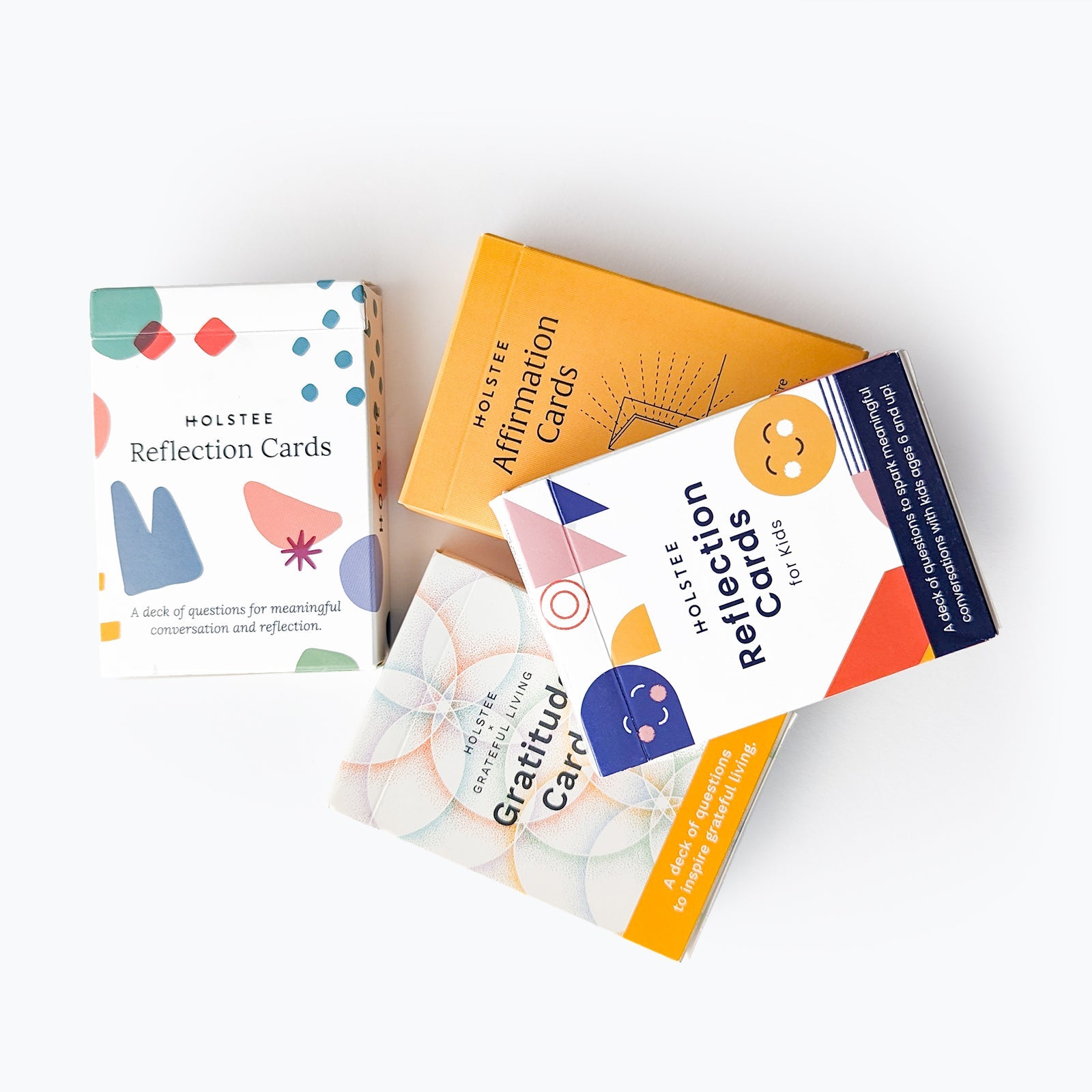
- Our Reflection Cards are built around prompts that invite you to step outside your own narrative for a few minutes at a time — the way sonder does.
- The original Holstee Manifesto started as a reminder to live as the main character of a story worth telling. It pairs well with sonder's reminder that everyone else is doing the same.
- The Flourishing Life is our membership community for people who want to practice this kind of attention in regular conversation with others who are too.
Frequently Asked Questions
What does "sonder" mean?
Sonder is a noun coined by writer John Koenig that means the realization that every stranger you pass is living a life as vivid and complex as your own — with their own ambitions, relationships, worries, and inner world. It names the moment you remember you are a minor character in thousands of other people's stories.
Is "sonder" a real word?
It is a real word in the sense that people use it and understand it — but it is not (yet) in most standard dictionaries. John Koenig invented it in 2012 for his Dictionary of Obscure Sorrows, a project of neologisms for feelings that exist but don't have names. The word has spread widely enough that it functions as real language in everyday conversation, journalism, and song lyrics, even if Merriam-Webster hasn't formally adopted it.
Who invented the word "sonder"?
The American writer John Koenig coined sonder in 2012 as part of his Dictionary of Obscure Sorrows. The Dictionary started as a blog, became a YouTube channel with millions of views, and was published as a book by Simon & Schuster in 2021.
How do you pronounce "sonder"?
SON-der — rhymes with "ponder." The first syllable is stressed. The "o" sounds like the "o" in "on," not the "o" in "soon."
How do you use "sonder" in a sentence?
Example: "Looking out over the city from the train window, I felt a sudden wave of sonder — every lit window was someone's full life unfolding without me in it." Sonder is typically used as a noun describing the feeling or realization itself, not as a verb.
What is the "sonder effect"?
The "sonder effect" is an informal name for the momentary experience of feeling sonder — the brief vertigo of stepping outside your own story and noticing that every person around you is the main character of a story just as full and specific as yours. It is sometimes described as humbling, sometimes as oddly freeing.
What is the difference between sonder and empathy?
Empathy is feeling with another specific person — sharing their emotional experience. Sonder is broader and more impersonal: it's the realization that every stranger has an emotional experience as rich as yours, even when you know nothing about them and will never meet them. Empathy happens one-to-one; sonder happens one-to-many.
What is the etymology of "sonder"?
Koenig's word is a constructed coinage, but its sound draws on two existing roots: the German sonder ("special" or "apart") and the French sonder ("to probe, to fathom"). The English word blends both — the feeling of perceiving that something apart from you is unexpectedly deep.