🌱 Enjoying this? It's a taste of The Flourishing Life, our year-long Holstee membership. Every month we explore a new theme like this one together, with guided practices, reflection prompts, and live conversations. Unlock full access →
We usually hear "integrity" and think of morality, being good, doing the right thing. The word actually means something simpler and, I'd argue, harder. It comes from integer: whole, complete, undivided. Integrity is the state of being one person instead of several, of having your outer life match your inner one closely enough that you can look in the mirror and recognize who's there.
Most of us know the opposite feeling intimately: the low-grade exhaustion of managing different versions of ourselves. One self for work, one for family, one for the people we're trying to impress, all of them slightly out of sync. Integrity is the slow work of collapsing those back into one. It's less about being impressive and more about being real, and the relief of it is hard to overstate.
Integrity means wholeness, not perfection
This is the reframe that matters. Living with integrity doesn't require you to be flawless or saintly. It requires you to be aligned, to close the gap between what you say you value and what you actually do. A whole person who admits a mistake has more integrity than a polished one who hides it.
The payoff is practical, not just moral. When your actions and values line up, decisions get clearer, you stop burning energy on internal conflict, and you build a kind of self-trust that no amount of outside approval can give you. You also stop having to remember which version of yourself you were supposed to be in any given room. We've wrestled with our own version of this, publicly, in pieces like integrity on trial and our team values.
If you have twenty minutes, Caroline McHugh's talk on the art of being yourself is the best thing I've found on what wholeness actually feels like in practice:
First, know what you actually value
You can't align with values you've never named. A useful starting point is the VIA classification of character strengths, developed by Chris Peterson, Martin Seligman, and a large team of researchers. It maps twenty-four strengths, things like honesty, curiosity, kindness, perseverance, and most of us have a handful of "signature" ones that feel core to who we are. Knowing yours gives your inner compass a needle.
Aristotle added a crucial wrinkle: a virtue isn't just something you have, it's something you apply in the right amount. He called it the Golden Mean. Bravery taken too far becomes recklessness; too little becomes cowardice. Honesty without kindness becomes cruelty. Integrity isn't about maxing out a virtue. It's about expressing it well, at the right time, in the right measure.

And measuring yourself against your own values beats measuring against everyone else's, which is a trap we've written about as social comparison.
Then, see your blind spots
The hard truth about wholeness is that you can't see all of yourself. The Johari Window, a model from the 1950s, lays this out cleanly: there are things both you and others know about you, things you hide, things neither of you has discovered yet, and, trickiest of all, a blind spot, things others see clearly that you can't.

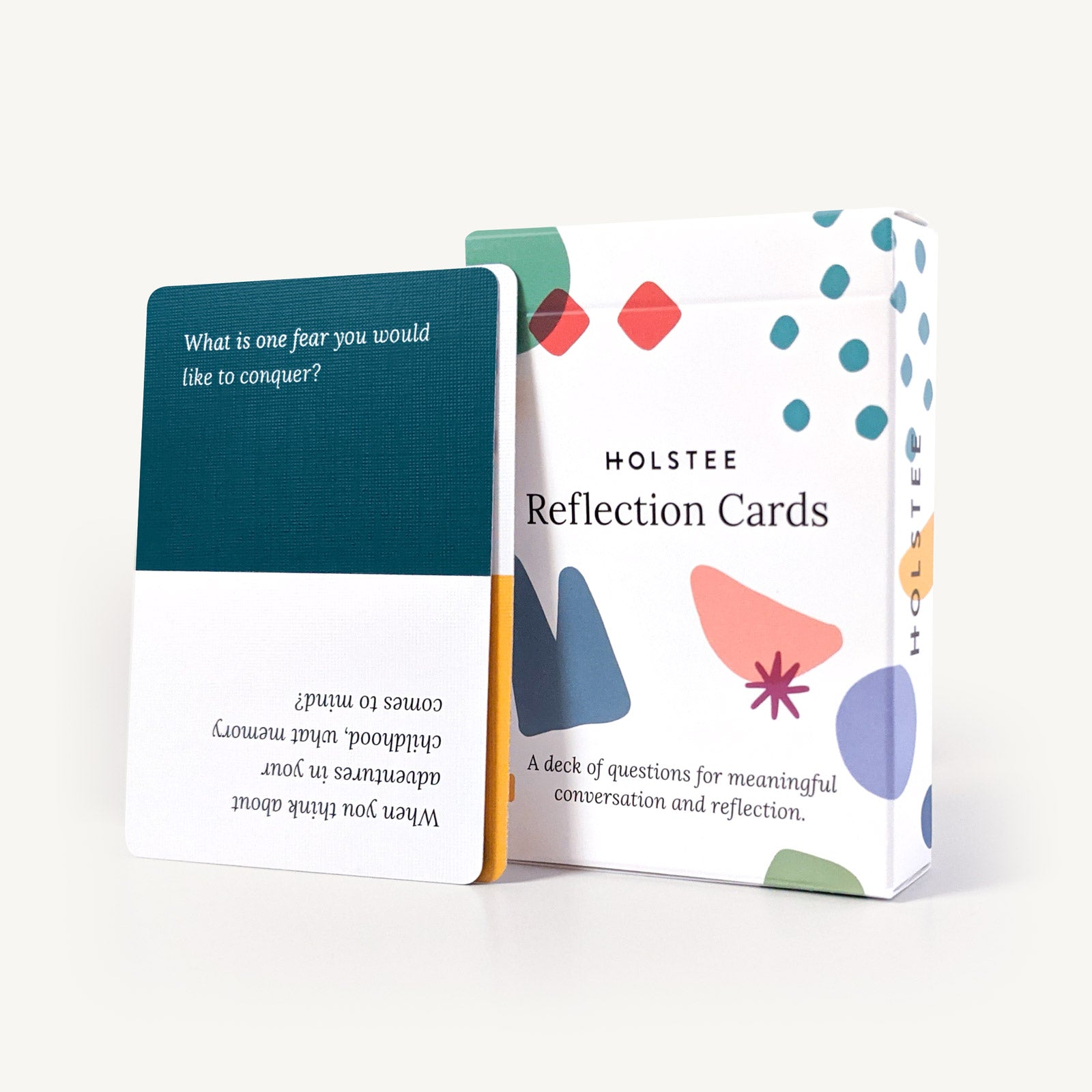
That blind spot is where integrity quietly leaks. You can value being a good listener and still interrupt constantly without knowing it. The only way to shrink the blind spot is to invite feedback from people you trust and actually stay open when it stings. It's uncomfortable, and it's the fastest route to closing the gap between who you mean to be and who you actually are. Our Reflection Cards are one low-stakes way to start those conversations.
A simple code to live by
If you want something more portable than a philosophy, Don Miguel Ruiz's Four Agreements are about as good as any code I've found:
Be impeccable with your word. Say what's true and kind, including to yourself.
Don't take anything personally. What others do is usually about their world, not yours.
Don't make assumptions. Ask the question instead of inventing the answer.
Always do your best. Your best varies by day, and that's fine. The effort is the point.
None of them are easy. All of them, practiced, pull your outer behavior closer to your inner values, which is the whole game.
The only judge that matters
In 1934, Dale Wimbrow wrote a poem called "The Guy in the Glass" that has outlived almost everything else from that year. It's about who actually gets to judge a life:
For it isn't your Father, or Mother, or Wife,
Who judgement upon you must pass.
The feller whose verdict counts most in your life
Is the guy staring back from the glass...
You can fool the whole world down the pathway of years,
And get pats on the back as you pass,
But your final reward will be heartaches and tears
If you've cheated the guy in the glass.
That's integrity in plain language. You can fool everyone else for a long time. You can't fool the person in the mirror, and that's the one whose opinion you'll be living with. Integrity isn't a destination you arrive at. It's a practice you return to, every day, in the small choice between who you really are and who you think you should be.
Going deeper, together
Reading about integrity is one thing. Practicing it alongside other people who are also trying is another, and it tends to stick better.
Integrity is one of twelve themes in The Flourishing Life, our year-long Holstee membership, alongside Intention, Kinship, Gratitude, and the rest. Over a year the community moves through all twelve together, and you can join any time and focus on whatever you need most right now. Each theme brings a small curriculum, fellow members working through it alongside you, and live conversations to make it real. It's not for everyone, but if you've read this far, it might be for you.
Frequently asked questions
What is integrity?
Integrity is living in alignment with your values, so that your actions match what you believe. The word comes from integer, meaning whole or undivided. More than just honesty or morality, integrity is the state of being one consistent person rather than several competing versions of yourself.
What is the difference between integrity and honesty?
Honesty is telling the truth to others; integrity is broader. It means your whole life, your choices, your words, and your private behavior, lines up with your values, whether or not anyone is watching. Honesty is one important expression of integrity, but integrity also includes self-honesty and consistency over time.
How do I figure out my core values?
Start by naming your character strengths, the qualities that feel most essential to who you are, such as honesty, kindness, curiosity, or courage. Frameworks like the VIA character strengths survey can help. Then notice which values you keep returning to in real decisions; those are your genuine ones, as opposed to the ones you think you should hold.
Does living with integrity mean being perfect?
No. Integrity is about wholeness, not flawlessness. It means acknowledging mistakes, staying aligned with your values, and returning to them when you slip, rather than performing a perfect image. A person who admits fault honestly often has more integrity than one who hides it.
What are the Four Agreements?
From Don Miguel Ruiz's book, the Four Agreements are a simple code for authentic living: be impeccable with your word, don't take anything personally, don't make assumptions, and always do your best. Practiced consistently, they help align your everyday behavior with your deeper values.
Why is integrity important for well-being?
Living in alignment with your values reduces the internal conflict and exhaustion of maintaining different personas, freeing up energy for what matters. Research links it to greater life satisfaction, stronger relationships, and more resilience. It also builds durable self-trust, a sense of being at home with yourself that external validation can't provide.
Michael Radparvar
Co-Founder, Holstee