🌱 Enjoying this? It's a taste of The Flourishing Life, our year-long Holstee membership. Every month we explore a new theme like this one together, with guided practices, reflection prompts, and live conversations. Unlock full access →
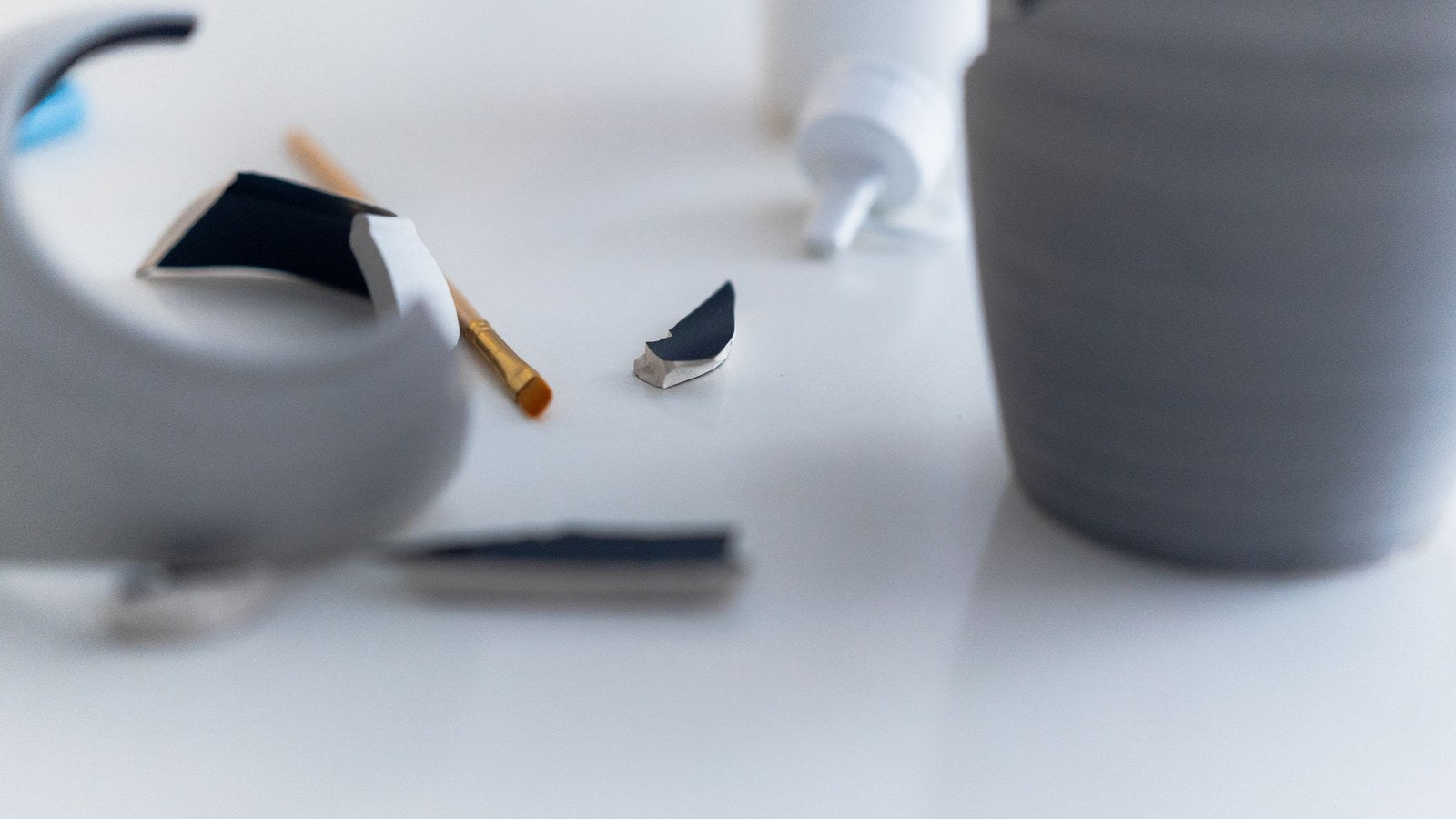
There's a Japanese tradition called kintsugi. When a ceramic bowl breaks, instead of hiding the repair, the craftsman rejoins the pieces with gold. The crack isn't disguised. It's gilded, made part of the object's story, and the bowl ends up more beautiful and more valuable for having been broken.
I think about that bowl a lot. Most of us, when life cracks us, spend enormous energy hiding the seam, hoping no one notices the place we fell apart. Resilience is the slow turn from hiding the crack to filling it with gold. It isn't about being unbreakable. It's about learning to break, and to come back together in a way that's stronger than before.
Resilience isn't being unbreakable
The word gets used like it means armor, the ability to take any hit and feel nothing. That version is brittle, and it's also exhausting to maintain. Real resilience is closer to a reed in a storm than a wall: it bends, it survives, it springs back. Some people even come through hardship more capable than before, not despite the difficulty but partly because of it.
That isn't a reason to go looking for suffering, and it doesn't mean every hard thing is secretly a gift. It just means resilience is a skill, not a fixed trait you're born with or without. You can practice it, and it grows. We've felt this in our own hardest stretches, the ones that taught us per aspera ad astra, through hardships to the stars.
The space between what happens and how you respond
The most important idea I know about resilience comes from Viktor Frankl, who survived a Nazi concentration camp and wrote Man's Search for Meaning about it. Stripped of everything, family, possessions, dignity, he found one thing that couldn't be taken: the freedom to choose his response to what was happening to him.
Between every stimulus and our reaction, Frankl saw, there's a space. It can be vanishingly small, a single breath, but inside it lives all our freedom. Most of our suffering comes from reacting on autopilot, straight from event to response with no pause between. Resilience is mostly the practice of widening that gap, even slightly, so that you get to choose instead of just react.
Focus on what you can control
The Stoics built an entire philosophy around one division: some things are within our control, and most things are not. Epictetus taught that peace comes from putting your energy where it can actually do something, your choices, your effort, your response, and releasing your grip on the rest, other people's opinions, the market, the weather, the past.
It sounds simple and it's surprisingly hard, because anxiety loves to fixate on exactly the things we can't change. A practice that helps: when you're overwhelmed, literally split a page into two columns, what's within my control and what isn't. Then spend your energy only on the first column. The relief is often immediate.
Be a kinder narrator
A surprising amount of resilience comes down to how you explain things to yourself. The psychologist Martin Seligman found that people who bounce back tend to read setbacks as temporary, specific, and not entirely their fault, while people who struggle read the same setback as permanent, pervasive, and personal. "I failed at this one thing" is recoverable. "I'm a failure" is a trap.
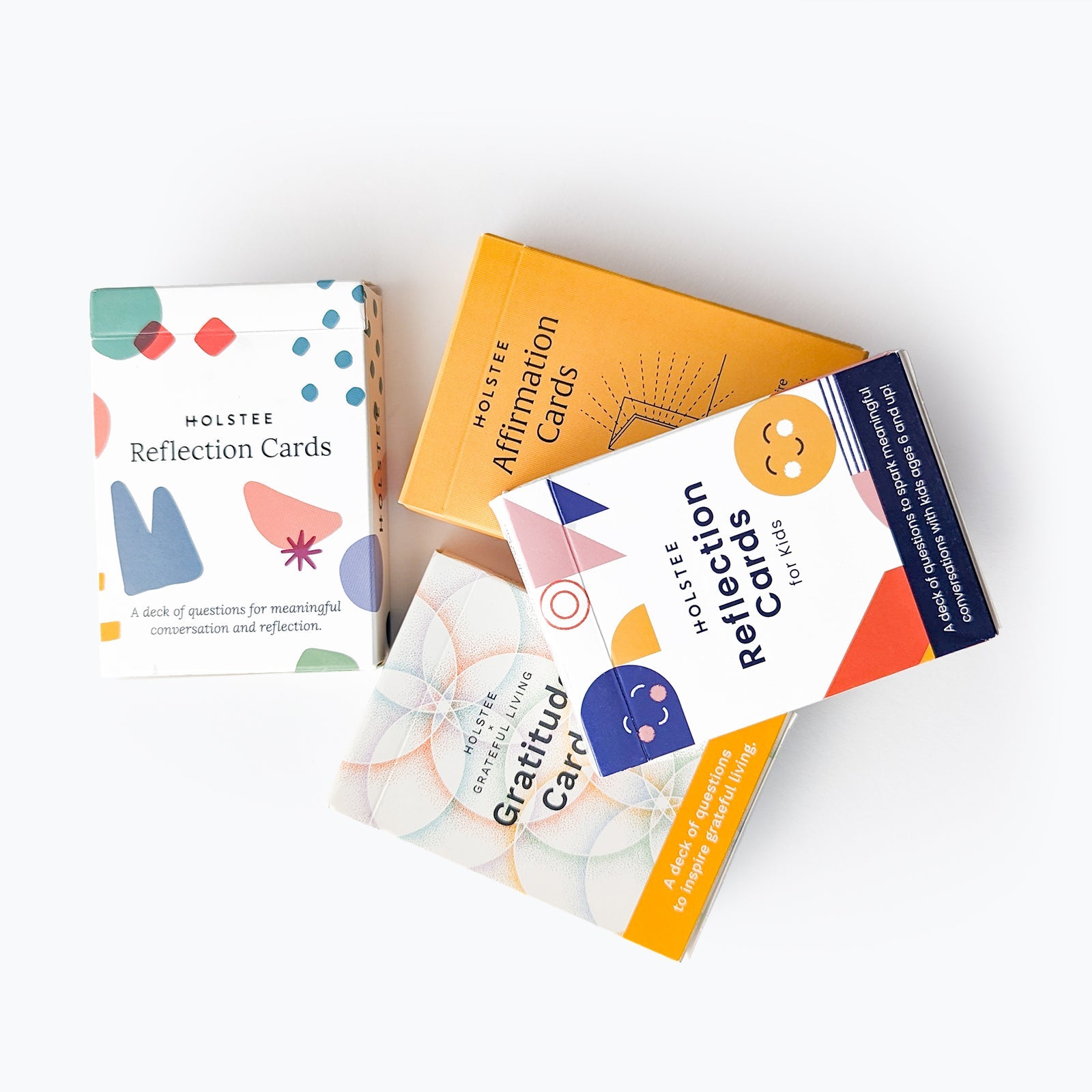
You can edit that inner narration, which is the whole idea behind cognitive restructuring: catch the harsh automatic thought, question the evidence, and replace it with something more accurate and more fair. Not fake positivity, just a truer sentence. "This is impossible" becomes "this is hard, and I can break it into steps." When the feelings are too big for arguing with, the meditation teacher Tara Brach offers a gentler tool she calls RAIN: Recognize what's happening, Allow it to be there, Investigate it with kindness, and Nurture yourself the way you would a hurting friend. Our Reflection Cards can help with the noticing part when you don't know where to start.
The growth on the far side
Here's something the research bears out and most of us only learn the hard way. Psychologists Richard Tedeschi and Lawrence Calhoun coined the term "post-traumatic growth" after interviewing people who'd been through terrible things and found that many emerged with a deeper sense of strength, closer relationships, and a richer appreciation for life. Not all of them, and not instead of the pain. But often, alongside it.
The mythologist Joseph Campbell mapped this as the hero's journey: the call, the trials, and the return, where you come back changed and carry what you learned to others. You're almost certainly in the middle of one right now. The poem the course opens with, attributed to Rumi, says it in four lines:
I said: What about my heart?
He said: Tell me what you hold inside it?
I said: Pain and sorrow.
He said: Stay with it. The wound is the place where the Light enters you.
That's the whole turn from kintsugi to gold. The wound stays a wound. But it can also become the place the light gets in, and the place you finally see how strong you are. Through hardships, to the stars.
Going deeper, together
Reading about resilience is one thing. Practicing it alongside other people who are also trying is another, and it tends to stick better.
Resilience is one of twelve themes in The Flourishing Life, our year-long Holstee membership, alongside Intention, Kinship, Gratitude, and the rest. Over a year the community moves through all twelve together, and you can join any time and focus on whatever you need most right now. Each theme brings a small curriculum, fellow members working through it alongside you, and live conversations to make it real. It's not for everyone, but if you've read this far, it might be for you.
Frequently asked questions
What is resilience?
Resilience is the capacity to adapt and recover in the face of adversity, stress, or hardship. It isn't about being unbreakable or unaffected; it's about bending without breaking and, often, growing stronger through difficulty. Importantly, resilience is a skill that can be developed, not a fixed trait you either have or don't.
Can resilience be learned?
Yes. While temperament plays a role, research shows resilience is largely built through practice. Skills like reframing negative thoughts, focusing on what you can control, regulating your nervous system through breathing, and finding meaning in hardship all strengthen resilience over time, much like a muscle.
What is the space between stimulus and response?
It's the idea, drawn from Viktor Frankl, that between something happening to us and our reaction to it lies a moment of choice. However brief, that gap is where our freedom lives. Much of resilience involves widening that space so we can choose a thoughtful response rather than reacting on autopilot.
What is the dichotomy of control?
A core Stoic principle from Epictetus, the dichotomy of control teaches us to distinguish between what we can control (our choices, effort, and responses) and what we cannot (other people, outcomes, circumstances). Directing energy toward the former and accepting the latter reduces anxiety and builds resilience.
What is post-traumatic growth?
Post-traumatic growth, a term coined by psychologists Richard Tedeschi and Lawrence Calhoun, describes the positive psychological changes some people experience after serious adversity, such as greater inner strength, deeper relationships, and a renewed appreciation for life. It doesn't replace the pain of trauma and isn't guaranteed, but it's a common and hopeful possibility.
How can I become more resilient day to day?
Build small, repeatable practices: pause before reacting, separate what you can control from what you can't, challenge harsh self-talk with more balanced thoughts, and use tools like steady breathing or the RAIN method when emotions run high. Over time these habits compound into a steadier, more adaptable way of meeting hard moments.
Michael Radparvar
Co-Founder, Holstee