Mindful Matter

More bad ideas.
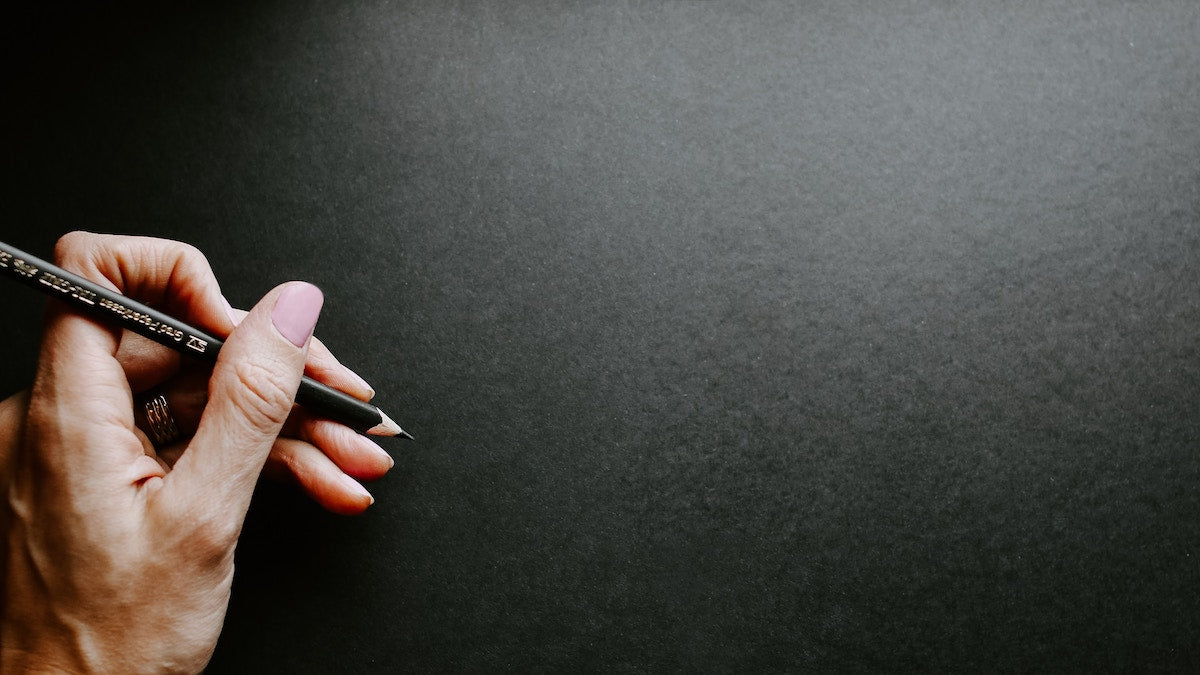
This past weekend, I brought my notebook and a pen to a nearby cafe with the intention of drawing some simple sketches. It’s not something I do often, but it’s something I’ve wanted to do more of. I opened my notebook and felt the familiar fear that comes from looking at a blank page. But this time, I remembered a line from this month’s Creativity Guide. “Generate more bad ideas. Sometimes it’s about the quantity, not quality. It’s proven that simply generating more ideas (even if it means producing less than great work) creates a pathway to ideas that ultimately stick.” It reminded me that the first time is rarely perfect — in fact, the best results often come after many imperfect attempts. Inspired by this thought, I touched my pen to the page and I wrote in all caps at the top: “IMPERFECT SKETCHES” I decided to reframe my sketching experience by removing the results-oriented expectation. Once I did that, I was able to relax and start moving my hand without judgment, ultimately doodling different perspectives of a simple chair. By altering our approach, we can reduce the pressure that sometimes comes up during the creative process. Not only can this lead to better outcomes, but it can also make the whole thing way more fun. Dave RadparvarCo-Founder, Holstee P.S. The past few weeks I’ve been sharing some of my creative struggles — like resistance and fear of the blank page — along with a few techniques that help me power through them. For more tips and inspiration, check out our Curated Resources for Creativity.
Learn more
My creative writing process.
"Perfectionism is the voice of the oppressor, the enemy of the people. It will keep you cramped and insane your whole life, and it is the main obstacle between you and a shitty first draft." - Anne Lamott Last week, I shared about powering through my resistance to the creative process. Once I manage that, I typically hit a second obstacle: the intimidating weight of the first stroke. I become terrified of putting pen to paper and the risk of destroying what is an otherwise pristine and unadulterated page. I have gotten better at facing this challenge since I began “morning pages” — a practice of writing at least three pages of longhand, stream-of-consciousness thinking every morning, popularized by Julia Cameron’s “The Artist’s Way.” Through my morning pages, I’ve learned to write even if I have nothing to say. I literally write things like: “Good morning, morning pages day 10. I really have nothing to say today. I slept well, but still feeling a bit tired and am sitting here watching the steam float up from my tea.” Bored by my own writing, I sometimes catch myself daydreaming. But the moment I catch myself, I immediately write about it: “I just caught myself daydreaming about…” It's strange to catch yourself lost in thought about something trivial, then magnify that thought by writing about it. But it’s also an incredible way to release these kinds of thoughts onto a page and out of your head. Similar to meditation, writing gives us a lens into our monkey-minds and perspective into the power and unpredictability of our thoughts. I just keep writing and writing, getting all the surface-level clutter out, removing the blockages between my thoughts and my words. Eventually ideas start flowing more naturally and I begin to write a bit quicker — I stop overthinking and I just get it all out. Knowing that there’s plenty of time for editing and analytical thinking later, I focus on keeping that stream from my heart, to my mind, to my fingers, open and flowing. Dave RadparvarCo-Founder, Holstee P.S. Looking for more creative inspiration? Check out this month’s Creativity Kit:
Learn more
Fight the resistance.
When it comes to creating, I struggle with the same feeling of resistance I shared in our three-part series on finding creative inspiration. It’s a concept I learned from Steven Pressfield’s “The War of Art” (recap shared in this month’s Creativity Curated Resources for members). Resistance is the mind’s aversion to a task and the distractions it creates in order to avoid the task altogether. These distractions can show up in different ways for everyone. For me, resistance takes the form of an infinite flow of “urgent” tasks broadcast to the forefront of my mind. The moment I open a blank page is the exact moment I realize that I need to do something else… put in the laundry, clip my nails, see if the mail arrived, or vacuum that cobweb in the corner of the ceiling. The lengths my mind will go to avoid a blank page is pretty incredible. Through practice, I have gotten a lot better at realizing the unexpected ways resistance tries to hijack my creative time. I now do my best to label it for what it is, schedule the distracting to-do for later, and power through with my work. It’s not always easy, but it's a constant practice. How does creative resistance take shape in your life? What ways have you found to power through it? Dave RadparvarCo-Founder, Holstee
Learn more
In The Studio With Kevin Lucbert
Each month, we are privileged to work with artists from all over the world. Their unique styles and points of view make for an especially diverse sense of inspiration in the art that arrives in our monthly Holstee Membership. From Los Angeles, California to Barcelona, Spain and everywhere in between, each piece of art is a true collector's piece. This month’s Creativity Art is by designer and illustrator Kevin Lucbert a French artist fascinated with the unknown. His signature ‘blue line’ aesthetic has been featured in the New York Times and in art exhibitions around the world. We got to work with him to help us bring our theme of Creativity to life! For a little more about what inspired this artwork, his process, and his life, here's a short Q&A: Where is home for you? Berlin, Paris and Bretagne,France. I have great childhood memories of my time spent in this beautiful region. My mother’s family comes from the small city of Pont-Aven, an enchanting place that inspired Paul Gauguin and many other artists. What is your definition of a successful life? Drawing each day, enjoying each moment of the creative process, and being able to make a living from f it. Describe your perfect day. My perfect day usually starts at 6am - sometimes earlier - when my two-year-old daughter wakes everyone up. Only moments later, I am sitting in my studio drawing, drinking good coffee, and enjoying the spring in Berlin after the long cold winter. How did you get into design? I spent most of my childhood reading comics. Classics like Tintin, Asterix, Franquin, Harold Foster but also artists less “traditional” like Moebius, Druillet, Hugo Pratt (Corto Maltese) were among my favorites. I then became naturally interested in drawing my own ideas and stories. Where do you find inspiration? Everywhere. Music, books, comics, films, graffiti on the street. I just finished reading the autobiography of the psychiatrist and psychoanalyst Carl Gustav Jung: “My Life” (1875-1961). His ideas about dreams and the subconscious life are mind blowing. During his life, he also created many beautiful drawings and mandalas. Which designers or thinkers influence/inspire you? Right now it is mostly the psychoanalyst Carl Gustav Jung. I recently discovered the intriguing yet virtuoso drawings of Austin Osman Spare. I also get ideas by reading books from writers with a strong imagination like H.P. Lovecraft, Edgar Allan Poe, or Philip K. Dick. I like watching David Lynch’s movies because he creates such beautiful and strange atmospheres, on the edge of dream and reality. I also like to look at the work of artists like M.C. Escher, Alfred Kubin, Caspar David Friedrich, James Ensor, Saul Steinberg, and David Hockney. I admire children’s book artists like Tomy Ungerer and comic book artists like François Schuiten and Benoît Peeters. Their wonderful comic book “La Tour” strongly influenced me as a child. What was the inspiration behind this design? A dreamgate. A step into the unknown. The Unexpected emerging in a banal environment. At the moment, what is your favorite … Color: Blue Food: Salmon Song: “Get Ready” Rare Earth (1969) Quote: “It never happened, yet it is still true! What magic art is this?” Robin Goodfellow, in Sandman #19: "A Midsummer Night's Dream" by Neil Gaiman
Learn more

Structured flexibility.
Some time after the rainforest adventure I shared a few emails back, my wife Setareh and I went to Amsterdam for our honeymoon. Before we left, I wanted to do my research, look up reviews, and make an itinerary so we could structure our limited time and not miss any of the gems hidden in plain sight.Setareh, on the other hand, felt that a trip like this was a rare moment for us to just let loose, be flexible, and explore this new beautiful city with open eyes. She preferred a more spontaneous approach that wouldn’t tie us to any kind of schedule.After some lively debate, we ultimately found ourselves agreeing to an approach we called structured flexibility. The concept is right in the name: have a general itinerary in mind, but be open to detours and random happenings that can’t be planned.In our case, it meant taking the time to research the neighborhoods we wanted to bike to and even some solid restaurants to have in our back pocket for when we got hungry — but it also meant letting go of the feeling that we had to do any of those things. For example, one day we were on our way to a museum when we spotted an epic outdoor farmer’s market. We decided to let go of our afternoon plans and walk the 5+ blocks of the market — and while we were exploring, I recognized Casey Neistat, an American filmmaker who came on my radar via his amazing video about biking the streets of New York City. We introduced ourselves and had a nice conversation about our respective travels through Amsterdam. Having a clear direction to the day got us going, but it was being open and having an adventurers’ mindset that made it particularly memorable.I don’t think this is revolutionary — but since it saved our honeymoon, I thought it was worth sharing with you.Till soon, Mike RadparvarCo-Founder, Holstee P.S. This is our last week exploring Adventure. Next week’s Holstee Membership dives into one of our favorite themes, Creativity!
Learn more
Q&A with Moni Yael Garwil
This month’s art is by Houston, Texas designer Moni Yael Garwil." Moni is (much more than) a pusher of pixels. She is a creator of lines, lover of learning, health, and women's rights. Moni believes, “The beauty of creativity is that it can be found in all of us and requires very little from us. Just a spark of curiosity and some form of inspiration can lead to innovative thinking and reinvigorate our inner artist.” For a little more about what inspired this artwork, her process, and her life, here's a short Q&A: Where is home for you? For nearly ten years now Houston, Texas has been my home. After university I moved over to this ever-expanding city and have seen the arts and culture sector blossom. It’s here that I developed my career, explored my aesthetic, met my amazing husband, and continue becoming my true self. And while Houston’s landscape may not be as bucolic or dynamic as other major cities in the U.S. (especially in terms of hiking), it still has so much to offer. What is your definition of a successful life? Like many people in our society I grew up equating success with fame and fortune. Honestly, I would be a fool not to welcome them. But beyond those materialistic notions I have come to realize that a successful life has more meaning. It’s about understanding who you are; finding your purpose. Having the opportunity to learn and grow every day as you work through your passion is priceless. Genuine fulfillment comes from using your skillset to positively contribute to humanity, big or small. Describe your perfect day. This is a bit of a loaded question for me. I truly am grateful for the life I’m able to live, but to be candid I struggle with anxiety, and self-loathing constantly, so “perfect days” are a bit hard to grasp. I constantly feel a push and pull that easily leads me to a downward spiral of negative thoughts and imposter syndrome, which in turn affects my whole day or even week. But thankfully, through the help of an established routine and my kind and supportive husband, I find myself moving forward. I have learned that days filled with a five-mile run, weight training, yoga and the outdoors elevate my endorphins, creativity, and overall productivity. How did you get into design? Before the ubiquity of the internet and social media, I was only exposed to traditional career paths in the small town I spent most of my childhood and teenage years. I didn’t see my artistic pursuits as a strength or viable path into adulthood. Uncertainty accompanied me with each grade level and it was frustrating because I was already looking to the future. It wasn’t until high school, junior year during my second semester, that I came across a library book covering some creative careers. I was floored and still very thankful that my BCIS teacher assigned that career project. Even though I didn’t really grasp the medium of graphic design, it stood out and I decided to pursue it. I had a path, but after my acceptance into The University of Texas at Austin there was still a bit of uncertainty. At the time, the freshman couldn’t declare Design as their major. I needed to apply as a Studio Arts major in the School of Fine Art and wait a year to apply to the Design Program. The uncertainty was daunting, but thankfully I was selected for the program, where I learned about design and all its manifestations. Where do you find inspiration? I find inspiration in movement, interactions, and self-reflection. Keeping my mind and heart open by stimulating it with exercise, plants, poetry, crystals, research, meaningful conversations, and evening stroll. What's your dream design project? I really enjoy tackling extended projects that incorporate different facets of design: full-scale branding, digital development, illustrated assets, and experiential elements. Taking part in positive, impactful campaigns and seeing your creations within urban landscapes is always a dream. Which designers or thinkers influence/inspire you? I learn about so many great humans every day and there’s a plethora of designers and thinkers that are extremely inspiring to me. However, I do find myself thinking about the wisdom and wonderful contributions of Juana Inés de la Cruz, Leonardo da Vinci, Simone de Beauvoir, Ray Eames, Frida Kahlo, James Turrell, E. Fay Jones, Dan Flavin, Carl Sagan, and Renee Engel. What was the inspiration behind this design? The beauty of creativity is that it can be found in all of us and requires very little from us. Just a spark of curiosity and some form of inspiration can lead to innovative thinking and reinvigorate our inner artist. This piece was designed to pay homage to Matisse's loose lines and bold cut-outs because even in times of confinement and uncertainty I find joy in these explorations. How does simplicity play a role in your life? Incorporating simplicity into my life brings sanity and order. After moving a total of ten times in the past fifteen years I have come to embrace living a minimalist lifestyle. Beyond enjoying a clean and natural aesthetic I have experienced the benefits of decluttering, organizing, and streamlining everything, from our home to my digital files. It’s a constant, and sometimes arduous, practice my husband and I actively pursue to the best of our abilities. At the moment, what is your favorite … Color: White Pine and warm neutrals are currently my favorite starting palette. Food: Natural, vegan-friendly foods sans heavy oils, creams, and sauces or high sodium and sugar. Having a simple and clean diet works best with my body and gives me the necessary nutrients to stay focused and energized. Song: I’m enamored with both “Toy (Reworked)” and “Worth None (Reworked)” from Noga Erez’s latest album, RADAR Reworked (Live with Israel Camerata Jerusalem Orchestra). She is an inspiring artist and this album is masterful, from the lyrics to the avant-garde sounds. Quote: “If you limit your choices only to what seems possible or reasonable, you disconnect yourself from what you truly want, and all that is left is compromise."
Learn more
Chew on this.
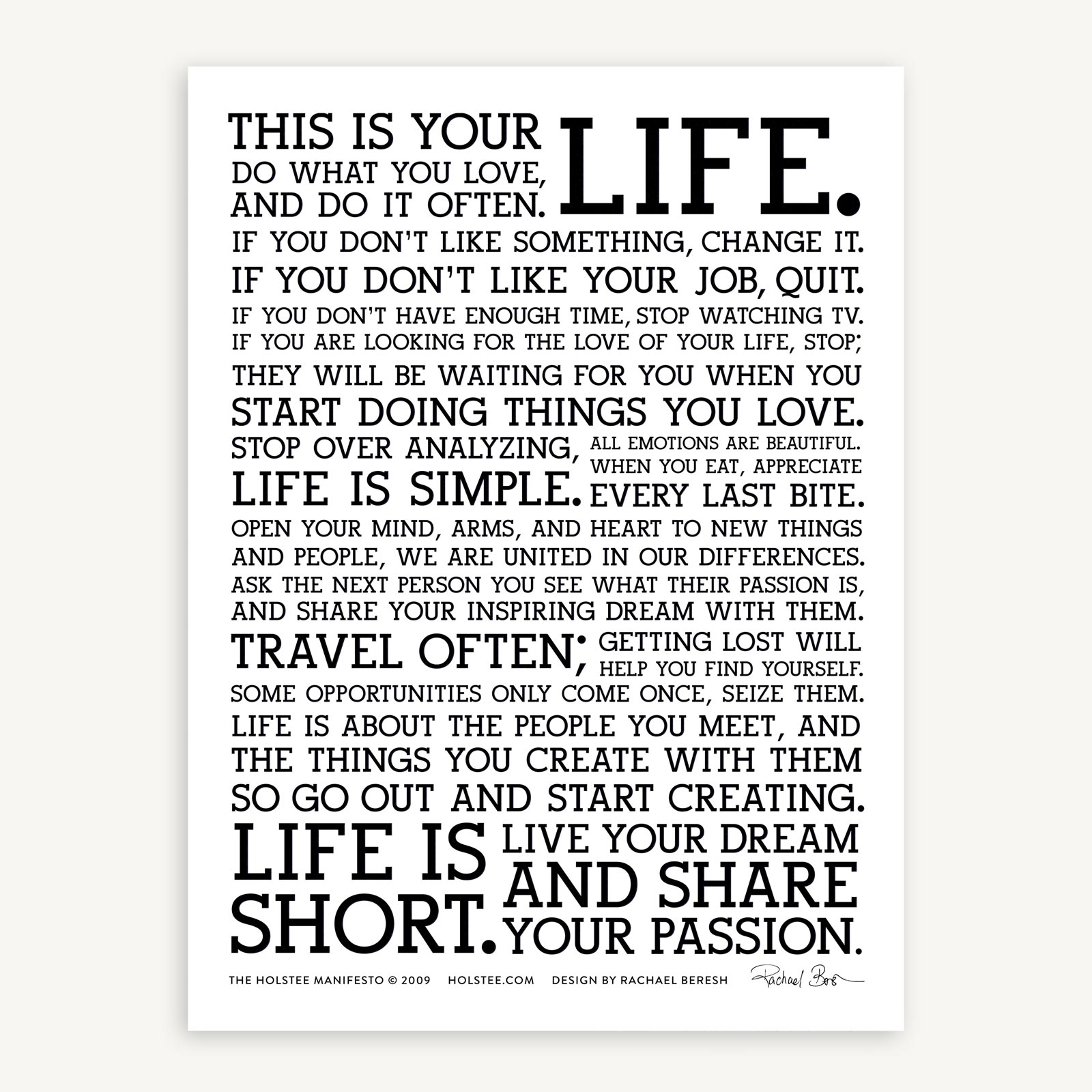
"In Pala," she explained, "we don't say grace before meals. We say it with meals. Or rather we don't say grace; we chew it." ― Aldous Huxley, Island A couple years ago, when reading Island by Aldous Huxley, I was transported on a literary adventure to the utopian island of Pala. The book begins when an English journalist, Will Farnaby, is shipwrecked on a Pacific island with a unique set of spiritual, yet pragmatic, traditions. Take their example of saying grace, a Pala tradition that Will learns about from Shanta, a young child at the dinner table: "Grace is the first mouthful of each course — chewed and chewed until there's nothing left of it,” Shanta tells him. “And all the time you're chewing you pay attention to the flavor of the food, to its consistency and temperature, to the pressures on your teeth and the feel of the muscles in your jaw." This tradition reminded me of one of my favorite lines from the Holstee Manifesto: “When you eat, appreciate every last bite.” It’s a beautiful practice of slowing us down so we can fully experience and appreciate what we are eating. Whenever I can remember, I try to practice this tradition from Pala with my own twist. During the first bite of my meal, I chew slowly and intentionally. I try to recognize and taste each ingredient, thinking about how far that ingredient has traveled and the amount of effort and resources required for it to grow. I also add an element of gratitude, thanking each living being that made the bite possible. One of the best things about adventures — even the mini-ones we take by reading a good book or immersing ourselves in a great film — is the way they can bring deeper meaning to our everyday lives. What’s the last great book you read? What souvenir did you take away from it? (Journal your response in Reflection.app →) Dave RadparvarCo-Founder, Holstee & Reflection.app P.S. Thanks to Jonny and the wonderful Curious Humans newsletter for introducing me to this book a few years back!
Learn more
Just a hike in the rainforest, what could go wrong?
When I received this month’s Adventure Art by Matilda van der Walt, it immediately triggered a memory from a few years go. My (now) wife, Setareh, and I were on our first trip together in the Puerto Rican rainforest. On our way back from a beautiful hike, the skies suddenly opened up and down came the rain. The drops were so large, we could feel each one hitting our arms, shoulders and heads. The first minute or two was refreshing and fun. But soon, our clothes and bags were soaked and the cold started to hit us. We huddled together and tried to take shelter under some large leaves. Eventually the rain started to let up, so we decided to make a break for it in case it started up again. Halfway back, we noticed that the ankle-deep brook we had crossed while entering the rainforest was now a rapidly moving river. We would need to ford the river, Oregon Trail style. In the moment, getting caught in the rain and needing to swim across a rapid river felt really unlucky. But if you were to ask either of us now, we wouldn’t change anything about that day. It’s become the part of the trip we remember and laugh about the most. Though we rarely wish for unexpected setbacks, they do have a special way of spicing up an adventure. Because if everything goes smoothly, it’s not really an adventure, right? Mike RadparvarCo-Founder, Holstee
Learn more